




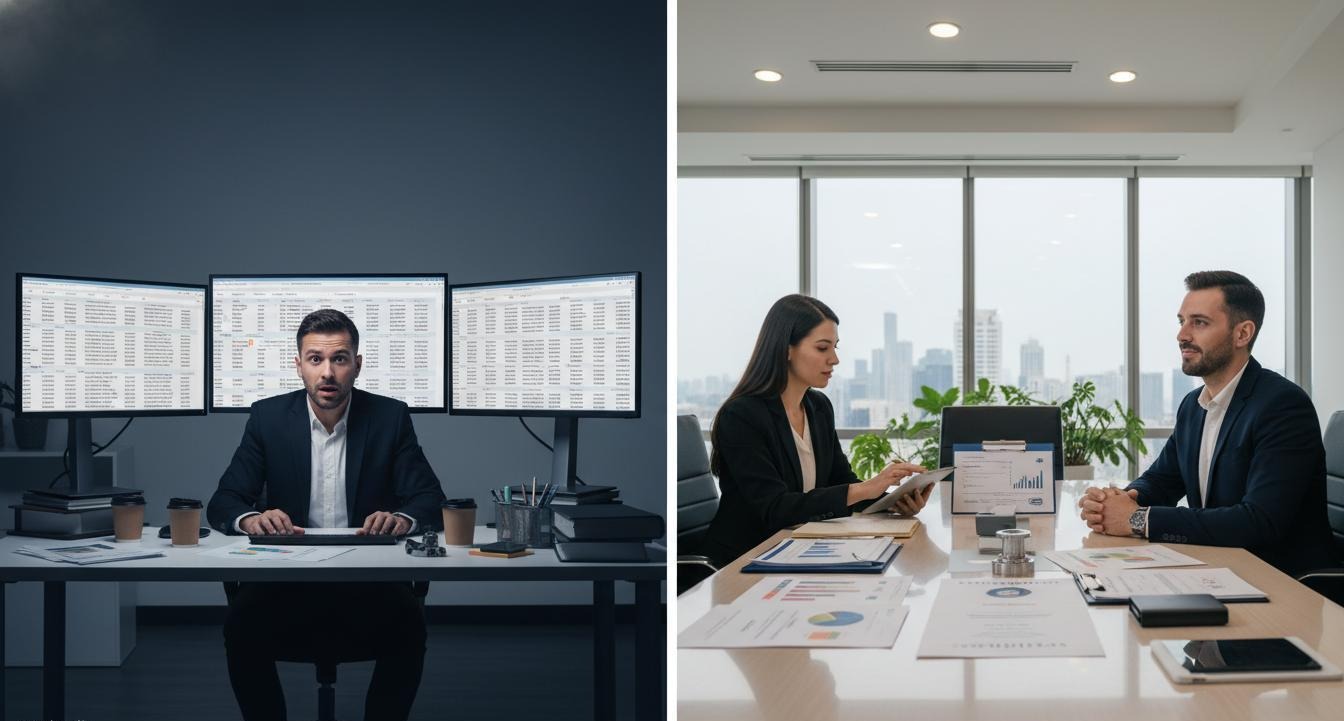
- A China sourcing agent reduces defect rates from 25–40% to below 10% through a four-stage on-site inspection chain that Alibaba cannot provide.
- Agents negotiate 15–30% lower factory prices because they speak Mandarin, understand local market dynamics, and eliminate “foreigner pricing” markups.
- 30–50% of Alibaba listings are trading companies, not factories, adding hidden markup without production control.
- The tipping point is $8,000–$12,000 in monthly purchase volume — below that, Alibaba direct sourcing may suffice; above it, an agent typically pays for itself.
- Trade Assurance covers payment disputes, not quality — a critical distinction that catches most first-time importers off guard.
Global buyers choose a China sourcing agent over Alibaba direct sourcing because an agent provides on-the-ground quality control, Mandarin-language negotiation, and end-to-end supply chain management that no online platform can replicate. Because 30–50% of Alibaba listings are trading companies posing as factories, buyers who source directly face hidden markups of 10–30%, defect rates of 25–40% on unmonitored orders, and a Trade Assurance system that protects payments but not product quality. A professional sourcing agent solves these problems by auditing factories in person, running four-stage quality inspections that drop defect rates below 10%, and negotiating prices 15–30% lower than what foreign buyers can achieve on their own.
I have spent 14 years helping overseas purchasing managers, Amazon FBA sellers, and SME importers navigate China’s manufacturing landscape. In that time, I have audited over 300 factories, managed quality control for orders totaling $50M+, and witnessed every sourcing mistake a buyer can make — because I made some of them myself when I started in 2012. The single most consequential decision any importer faces is not which factory to choose, but how to choose that factory.
What Is the Real Difference Between a China Sourcing Agent and Alibaba?
The distinction is simple but the implications are enormous: Alibaba is a platform that connects you with suppliers; a China sourcing agent is an on-the-ground operations team that manages the entire procurement process on your behalf. Because these two approaches solve fundamentally different problems, comparing them as if they were interchangeable alternatives leads to costly misunderstandings.
Alibaba Is a Platform, Not a Partner
Alibaba.com is a marketplace — the world’s largest B2B product directory. It allows you to search suppliers, send inquiries, compare quotes, and place orders. After that initial connection, virtually everything else is your responsibility. You vet the factory. You negotiate pricing. You arrange quality inspections. You manage logistics and customs. Alibaba provides the telephone; you have to make every call yourself.
This works well for experienced importers who know how to verify factories, read Chinese business licenses, and interpret the difference between a manufacturer and a trading company. For the vast majority of overseas buyers, the platform’s accessibility masks a steep learning curve.
A Sourcing Agent Is Your On-the-Ground Operations Team
A professional China sourcing agent does not just find suppliers — they manage the complete sourcing lifecycle. This includes supplier identification and verification, price negotiation in Mandarin, sample coordination, production monitoring, quality inspection at multiple stages, compliance verification, and shipping consolidation. Because the agent is physically present in China and speaks the language, they can resolve problems in hours that would take a foreign buyer weeks of emails and frustration.
I remember a client from Texas who spent three weeks trying to get a straight answer from an Alibaba supplier about whether their stainless steel product passed salt spray testing per ASTM B117-19. I called the factory directly, spoke with their quality manager in Mandarin, and had the actual test report in our client’s inbox within 90 minutes. That is not a luxury — it is a operational necessity when your margins depend on precision.
Why Does Alibaba Direct Sourcing Carry Hidden Risks?
Alibaba has made sourcing from China accessible to millions of buyers worldwide. Accessibility, however, is not the same as safety. Because the platform allows virtually any registered business to list products with minimal verification of their actual manufacturing capabilities, buyers face systemic risks that are not immediately visible.
30–50% of Alibaba Listings Are Trading Companies, Not Factories
According to a 2026 analysis by eJet Procurement, 30–50% of Alibaba listings are trading companies presenting themselves as manufacturers. These intermediaries add 10–30% markup to factory prices while controlling nothing in production. When you place an order with a trading company, your specifications pass through a salesperson who may lack technical knowledge, your feedback gets filtered and delayed, and you have zero direct relationship with the people actually making your product.
Because trading companies profit from the spread between factory price and your price, their financial incentive runs opposite to yours — they want higher margins, you want lower costs. A sourcing agent, by contrast, charges a transparent fee and negotiates on your behalf, so their incentive aligns with getting you the best factory price.
Quality Fade and Bait-and-Switch Are Systemic
Quality fade is one of the most insidious problems in China sourcing. Your first order meets specifications perfectly. The second order is mostly fine. By the third or fourth order, the materials have subtly changed, the finish is slightly different, and dimensions have drifted — but never enough to trigger an obvious rejection. Because this decline is gradual and often within technical “tolerance,” most buyers do not notice until customer complaints start arriving.
Bait-and-switch is more aggressive: the supplier sends you a high-quality sample made with superior materials and careful assembly, then produces your bulk order at a cheaper factory using inferior inputs. I saw this firsthand with a European kitchenware brand that ordered 8,000 silicone spatulas through an Alibaba “Verified Supplier.” The sample was perfect — food-grade silicone, clean edges, accurate Pantone color. The bulk order arrived with air bubbles, uneven coloring, and a distinct chemical smell. By the time the dispute was filed, 11 weeks had passed and the client received only 60% compensation for the defective portion.
Trade Assurance Covers Payment, Not Quality
This is perhaps the most dangerous misconception among first-time importers. Alibaba’s Trade Assurance is a payment protection mechanism. It covers situations where a supplier does not ship your order or ships significantly late. It does not effectively cover subjective quality differences, minor defects, or products that technically match the description but fail to meet your expectations.
Because the dispute process requires Alibaba’s team to mediate between your quality claims and the supplier’s counter-arguments, the burden of proof falls on you — and proving that “the blue is slightly wrong” or “the stitching is not as neat as the sample” across language and cultural barriers is extraordinarily difficult. Trade Assurance is a seatbelt: it helps in a crash, but it does not prevent the crash, and it does not guarantee you walk away without injuries.
How Does a China Sourcing Agent Deliver Better Quality Control?
Quality control is the single most compelling reason to engage a China sourcing agent. Because defect rates for unmonitored orders range from 25–40% according to QIMA industry data, while agent-managed orders with a full inspection chain achieve defect rates below 10%, the math is unambiguous — on-site quality control pays for itself on the first prevented disaster.
Four-Stage Inspection Chain vs. Arrival-Only Inspection
When you source directly through Alibaba, your quality control typically happens at one point: when the goods arrive at your warehouse. By that time, it is too late. Defective units are already produced, packaged, shipped across an ocean, and sitting in your facility. Returns are logistically impractical, re-orders take weeks, and your customer deadlines are already missed.
A professional sourcing agent deploys a four-stage inspection chain:
- Supplier Audit (Before Ordering) — The agent visits the factory in person, verifies business licenses, checks production equipment, reviews quality management systems, and confirms that the factory actually manufactures the product they list. This eliminates trading company misrepresentation before a single dollar changes hands.
- First Article Inspection (At Production Start) — The agent inspects the first production units against your approved sample and specification sheet. Any deviation is caught immediately, before the production line runs 5,000 units in the wrong direction.
- DUPRO Check (At 30–50% Completion) — During-production inspection catches process drift, material substitutions, and assembly errors while there is still time to correct them. This is the stage where quality fade is identified and stopped.
- Pre-Shipment Inspection (Before Container Seals) — The final inspection confirms finished goods meet all specifications before the container is sealed and shipped. AQL sampling standards are applied, and the shipment is either approved or held for correction.
Because each stage catches a different category of defect, the cumulative effect reduces the probability of receiving defective goods by 60–75% compared to arrival-only inspection.
Real-Time Production Monitoring Eliminates Surprises
Beyond formal inspections, a sourcing agent provides continuous production monitoring. When a factory encounters a material shortage, a machine breakdown, or a scheduling conflict, your agent knows within hours — not weeks. I was managing a multi-SKU kitchenware order for an Australian client in March 2026 when the factory’s raw material supplier delayed a stainless steel shipment by five days. Because I was on the ground and in daily contact with the production manager, I immediately re-sequenced the production schedule to prioritize items using available materials, keeping the overall shipment on time. The client never even knew there was a problem. That is the difference between a platform and a partner.
When Does a Sourcing Agent Actually Save You Money?
The most common objection to hiring a China sourcing agent is cost. “Why pay 5–10% commission when I can source for free on Alibaba?” This question is logical on the surface but flawed in its accounting. Because the real cost of sourcing is not the unit price — it is the total cost of ownership (TCO), which includes defects, delays, disputes, and the opportunity cost of your time.
The TCO Comparison: $2.00/Unit vs. $2.16/Unit Reality
Consider a product priced at $2.00/unit on Alibaba. Through a sourcing agent with an 8% commission, the same product costs $2.16/unit. On a 10,000-unit order, that is $1,600 in agent fees. The Alibaba price looks cheaper — until one defective shipment flips the math.
| Cost Category | Alibaba Direct | China Sourcing Agent |
|---|---|---|
| Unit cost | $2.00 | $2.00 + 8% fee = $2.16 |
| Platform/service fee | 0–2% Trade Assurance | 5–10% of order value |
| Quality inspection (third-party) | $300–$500 per inspection | Included in service |
| Defect exposure rate | 25–40% without QC | Below 10% with full QC chain |
| Negotiated price reduction | Limited (foreign buyer markup) | 15–30% lower through local negotiation |
| Time investment per order | 15–25 hours/week managing suppliers | 2–3 hours/week reviewing reports |
| Dispute resolution time | 7–16 weeks (Trade Assurance) | Issues resolved on-site in days |
Now factor in a realistic scenario: on a 10,000-unit order at $2.00/unit ($20,000 total), a 30% defect rate means 3,000 unsellable units. Even if Trade Assurance compensates you 60% of the defective value ($3,600), you have lost $2,400 on unsellable goods plus 9–16 weeks of dispute resolution time plus the cost of re-ordering. Because the agent-managed order at $2.16/unit with a defect rate below 10% would have produced at most 1,000 defective units — and those would have been caught before shipment — the agent route saves you thousands on a single order.
Negotiation Leverage Saves 15–30% on Factory Pricing
A skilled sourcing agent who speaks Mandarin and understands Chinese business culture can negotiate prices 15–30% lower than what a foreign buyer can achieve directly. This is not magic — it is a combination of factors:
- Language precision: Negotiating in Mandarin eliminates the 10–15% “foreigner premium” that many factories add when quoting to overseas buyers.
- Market knowledge: An agent knows the actual factory-gate price because they negotiate similar products across multiple suppliers every week.
- Relationship leverage: Agents who bring repeat business to factories have negotiating power that one-time foreign buyers simply do not.
- Cost structure understanding: Because an agent understands the breakdown of material costs, labor, and overhead, they can identify where a factory’s quote is inflated and push back with specificity.
Because the negotiation savings alone often exceed the agent’s commission, the net cost of using an agent can actually be lower than sourcing directly on Alibaba — before even accounting for quality control benefits.
What Can a China Sourcing Agent Do That Alibaba Cannot?
Beyond quality control and negotiation, a China sourcing agent provides capabilities that no online platform can offer — capabilities that become increasingly valuable as your sourcing operation grows in complexity.
Access to Unlisted Factories and 1688 Domestic Pricing
Many of China’s best manufacturers do not list on Alibaba. These factories operate entirely through domestic sales channels — primarily 1688.com, China’s domestic wholesale platform — or rely on established guanxi (relationship) networks built over years of in-person collaboration. Because these unlisted factories do not pay for Alibaba memberships, English-speaking sales staff, or platform advertising, their prices are 20–40% lower for equivalent products.
1688.com offers prices that are dramatically lower than Alibaba because you are buying at domestic trade prices rather than export-markup prices. The platform, however, is entirely in Mandarin and designed for Chinese businesses. An agent who can navigate 1688 on your behalf unlocks a pricing tier that is simply invisible to foreign buyers on Alibaba.
Last year, I sourced a line of stainless steel kitchen tools for a Canadian distributor. The Alibaba quotes ranged from $3.20–$4.50 per unit. Through our factory network in Jieyang, we identified a manufacturer not listed on any English-language platform. Their price: $1.85 per unit — 42% below the lowest Alibaba quote. The quality was measurably better because this factory specialized exclusively in kitchen tools rather than producing a random assortment of product categories.
Consolidation, Compliance, and Customs Management
When you source from multiple Alibaba suppliers, each factory ships independently. You deal with multiple shipping timelines, multiple customs declarations, and multiple points of failure. A sourcing agent consolidates products from different factories into a single shipment, optimizes container loading, and manages all export documentation.
More critically, compliance verification is where the real risk lies. Because many Alibaba suppliers claim certifications (CE, FDA, FCC, CPSIA) that are either expired, forged, or inapplicable to your specific product variant, an agent who physically verifies certification documents and cross-checks them against official databases can prevent shipments from being seized at customs. I have seen buyers lose entire containers because a supplier’s CE certificate was valid for a different product category than what was shipped. That is a $30,000+ mistake that takes 10 minutes of proper verification to prevent.
Ready to Source Smarter?
Explore our verified product range and see how CBNB Supplier’s on-the-ground expertise delivers better quality, lower costs, and zero surprises for global buyers.
How Do You Choose the Right China Sourcing Agent?
Not all sourcing agents are created equal. Because the sourcing agent industry has no universal licensing or certification requirement, the quality of service varies dramatically — and a bad agent can be worse than no agent at all. Here is my framework for evaluating any sourcing partner, built from 14 years on both sides of the table.
5 Non-Negotiable Verification Steps
- Confirm physical office presence in China. Request the exact address and verify it on Baidu Maps or Google Maps satellite view. A legitimate sourcing agent operates from a real office in a Chinese manufacturing hub, not a virtual mailbox or a residential apartment.
- Request references from foreign buyers in your industry. Ask for at least two references and contact them directly. Ask specifically about communication quality, defect management, and whether they have ever experienced hidden commissions.
- Conduct a live video factory tour. Ask the agent to walk you through a factory they currently manage, live on video. Pay attention to whether the factory staff recognizes the agent by name and whether the agent can explain the production process in detail — not just give a scripted tour.
- Verify business license and registered scope. Request the agent’s Chinese business license and confirm that their registered scope includes sourcing, procurement, or trade agency services. Cross-check the registration number through local government databases.
- Test response speed and technical English fluency. During your initial consultation, evaluate response time during Chinese business hours and the agent’s ability to discuss technical specifications in accurate English. A competent agent responds within hours and can translate product spec sheets without ambiguity.
Red Flags That Signal an Unreliable Agent
- Refusing video calls or in-person meetings — A legitimate agent is proud to show their operation. Evasion is a warning sign.
- No verifiable physical office address in China — If their address traces to a residential building or P.O. box, walk away.
- Pushing for large upfront deposits — Standard practice is payment terms aligned with factory milestones, not large deposits into personal accounts.
- Unclear fee structure or hidden commissions — A trustworthy agent discloses exactly how they earn money. If they cannot explain their fee model in one sentence, assume there are markups you are not seeing.
- Claiming expertise in every product category — China’s manufacturing is regionally specialized. An agent who claims to source everything from electronics to textiles to machinery is likely a generalist with shallow factory relationships in all categories.
Which Sourcing Method Fits Your Business?
The honest answer is that neither method is universally superior — the right choice depends on your order volume, product complexity, internal resources, and risk tolerance. Because the cost-benefit equation shifts dramatically at different scales of operation, here is a clear decision framework.
Choose Alibaba Direct Sourcing When:
- Your order value is below $5,000 and the product is standardized
- You are placing a one-time test order with simple specifications
- You have sourcing experience and can verify suppliers independently
- Price comparison speed is your primary priority
- You speak Mandarin or have a trusted local partner for communication
Choose a China Sourcing Agent When:
- Your monthly purchase volume exceeds $8,000–$12,000
- Products require custom tooling, certifications, or complex specifications
- You are managing 3+ active suppliers simultaneously
- Quality defects would directly threaten your brand reputation
- You cannot spend 10+ hours per week managing factory communication across time zones
- You need access to unlisted factories or domestic pricing through 1688
The most effective approach for many growing businesses is a hybrid model: use Alibaba for initial supplier discovery and price benchmarking, then engage a sourcing agent to verify the shortlisted factories, manage production, conduct quality inspections, and coordinate shipping. This strategy combines the discovery power of the platform with the execution capability of an on-the-ground team.
Because every sourcing decision ultimately comes down to how much risk you are willing to accept versus how much control you need, the question is not “which is better” — it is “which risks can I afford to manage myself, and which do I need professional help to mitigate?”
If you are sourcing products where quality failures would damage your brand, where compliance violations could result in customs seizures, or where the total cost of a defective shipment exceeds three months of agent fees — the answer is clear. A China sourcing agent is not an expense. It is an investment in risk mitigation, quality assurance, and supply chain efficiency that pays for itself on the first order where it prevents a disaster.
Let’s Discuss Your Sourcing Strategy
Whether you are evaluating suppliers on Alibaba or looking for an on-the-ground partner in China, our team at CBNB Supplier can help you make the right call for your business.
Frequently Asked Questions
Post time: May-28-2026