





For international B2B buyers, sourcing products from China remains one of the most cost-effective strategies for building a competitive product line — but it also carries significant risks. Language barriers, quality inconsistencies, supplier fraud, and logistics headaches can quickly erase the margin advantages of offshore procurement. This is precisely why many experienced importers partner with a professional China sourcing agent to navigate the complexities of the Chinese manufacturing ecosystem.
This guide provides a structured, data-driven framework for evaluating sourcing partners, based on the proven operational model of China-Base Ningbo Foreign Trade Group Co., Ltd. (CBNB) — a Top 500 Chinese foreign trade enterprise with over $2 billion in annual exports, 30+ years of industry experience, and strategic partnerships with more than 36,000 verified factories across China.
Why Do International Buyers Need a China Sourcing Agent?
Definition: What Is a China Sourcing Agent?
A China sourcing agent is a professional intermediary that acts as the buyer’s local representative — handling supplier identification, price negotiation, quality inspection, production monitoring, and international logistics. Unlike a simple trading company that merely facilitates transactions, a full-service product sourcing company China like CBNB actively manages the entire supply chain on behalf of the buyer.
Key Benefits of Using a Sourcing Partner
| Challenge of Direct Sourcing | How a Sourcing Agent Solves It |
|---|---|
| Language and communication barriers | Bilingual sourcing managers handle all factory communications, contract reviews, and technical specifications in Chinese and English. |
| Supplier verification difficulty | Agents maintain pre-vetted factory databases. CBNB works with 36,000+ factories that have been assessed for production capacity and quality control systems. |
| Quality inconsistency across batches | On-site quality inspections at every stage — raw materials, in-process production, and pre-shipment final checks. |
| Minimum order quantity (MOQ) conflicts | Aggregated buying power reduces MOQ requirements, and the agent negotiates flexible terms on your behalf. |
| Logistics and customs complexity | End-to-end logistics management including FOB shipping, customs clearance, and overseas warehouse delivery. |
| Payment and fraud risk | Established agents use secure payment terms (L/C, T/T with deposit structures) and factory contracts that comply with Chinese commercial law. |
According to a 2024 survey published in the Journal of International Management, companies that use professional procurement intermediaries in cross-border sourcing report 31% fewer quality incidents and 23% shorter lead times compared to direct factory sourcing without local representation.
What Services Does a Professional Product Sourcing Company in China Offer?
A full-service wholesale supplier China partner like CBNB provides a multi-layered service model that goes far beyond simple factory introductions.
One-Stop Sourcing Service Stack
- Product Sourcing & Supplier Matching — The team identifies the best-fit factories from its network of 36,000+ vetted manufacturers based on your product specifications, budget, and quality requirements.
- Price Negotiation & Contract Management — Leveraging aggregate purchasing power, the sourcing team negotiates competitive FOB pricing, payment terms, and delivery schedules directly with factory owners.
- Sample Procurement & Approval — Manages sample ordering, shipping, and evaluation cycles — typically 3–7 days for standard samples.
- Production Monitoring — Regular factory visits during production runs to verify that manufacturing stays on schedule and meets agreed quality standards.
- Quality Control Inspection — Three-stage inspection: incoming material check (IQC), in-process sampling (IPQC), and final outgoing inspection (OQC) with AQL sampling standards.
- Customs & Logistics Coordination — Manages export documentation, container booking, cargo loading supervision, and shipping from major ports including Ningbo and Shanghai.
- OEM/ODM Support — Product development teams assist with custom specifications, packaging design, labeling, and regulatory compliance documentation for your target market.
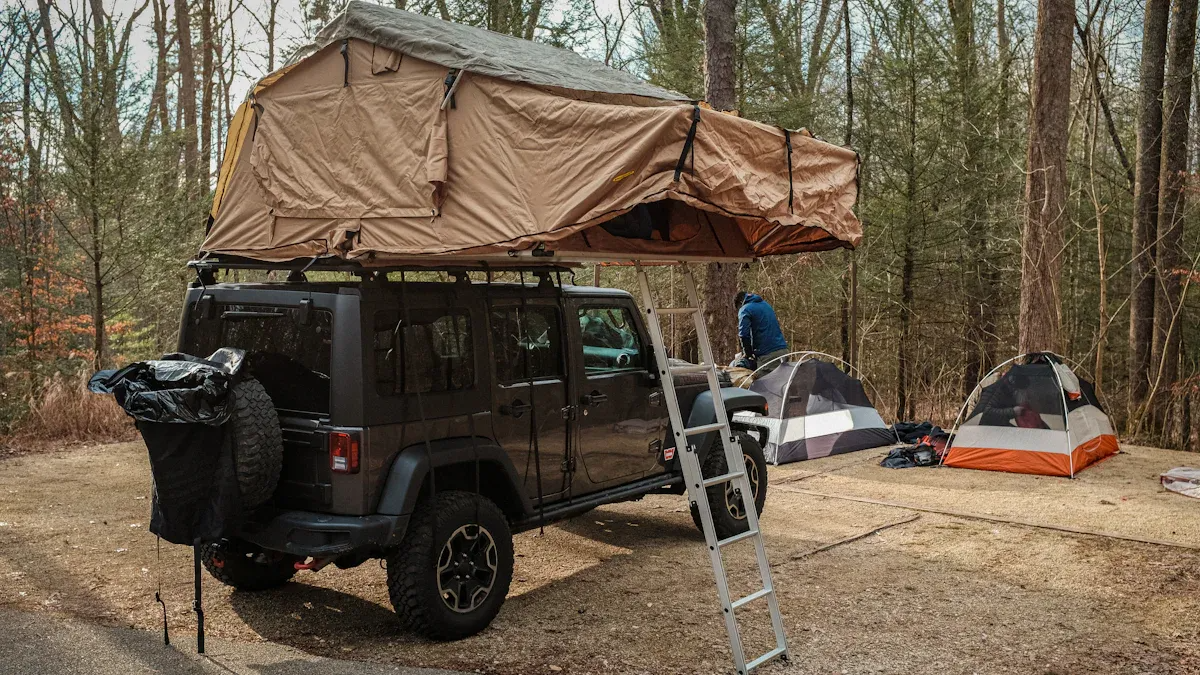
“We were a small home-goods retailer in Australia looking to develop a private-label line of outdoor camping gear. Instead of flying to China to visit dozens of factories — which we simply couldn’t afford — we partnered with CBNB as our China sourcing agent. Their team shortlisted six factories within a week, negotiated pricing 18% below our initial budget, and managed the entire production run from sample approval to container loading. Our first shipment of 5,000 rooftop tents arrived on time with zero defect claims. We have since scaled to 12 product SKUs through the same partnership.”
— Sarah L., Founder & CEO, Aussie Outdoor Essentials (name withheld for confidentiality)
How to Evaluate a Chinese Factory Supplier Through a Sourcing Partner
Even when working through a sourcing agent, B2B buyers should understand the criteria used to evaluate Chinese factory suppliers. Reputable partners like CBNB apply a rigorous assessment framework:
Factory Supplier Evaluation Checklist
| Evaluation Criterion | What to Verify | Red Flags |
|---|---|---|
| Business License & Registration | Valid Chinese business license, registered capital, and business scope matching your product category. | Recently registered company (<2 years) with minimal registered capital. |
| Production Capacity | Factory size (sqm), number of production lines, monthly output capacity, shift structure. | Claims exceed factory space or equipment capability. |
| Quality Certifications | ISO9001, CE, FDA, BSCI, or industry-specific certifications relevant to your target market. | No verifiable certifications; only website logos without certificate copies. |
| Export Experience | Countries exported to, annual export volume, existing international client references. | No export history or unwillingness to provide trade references. |
| R&D Capability | In-house engineering team, tooling capabilities, sample development lead time. | No R&D staff; all products are copies with no original designs. |
| Social Compliance | Working conditions, labor practices, environmental permits. | Refusal of factory audit; no BSCI or similar social audit. |
CBNB’s team maintains a continuously updated database of factory performance metrics across these dimensions. When a specific product inquiry comes in, the procurement team cross-references the requirements against factory ratings — a process that typically identifies 3–5 qualified candidates within 48 hours.
How to Choose the Right OEM Manufacturer China Partner?
For buyers seeking custom product development, selecting an OEM manufacturer China partner requires a focused evaluation of technical capabilities. Here is a step-by-step decision framework used by professional sourcing agents:
- Define your product specifications clearly — Provide detailed technical drawings, material specifications, and quality requirements before approaching factories.
- Evaluate tooling and mold-making capability — The best Chinese factory suppliers for OEM work typically have in-house mold workshops and can produce custom tooling within 15–25 days.
- Request reference products — Ask for samples of similar OEM products the factory has produced for other clients to assess finish quality and precision.
- Negotiate intellectual property protection — Ensure the contract includes non-disclosure agreements (NDAs) and non-compete clauses enforceable under Chinese law.
- Plan for scale — Confirm that the factory’s peak production capacity can accommodate 2× to 3× your initial order volume without compromising lead times.
- Involve your sourcing agent in factory visits — CBNB’s experienced procurement managers can accompany you on factory inspections or conduct video audits on your behalf.
The U.S. Department of Commerce maintains a China Market Compliance Resource page that provides guidance on regulatory requirements for importing Chinese-manufactured goods — a useful reference when validating sourcing partner claims.
Case Study: Sourcing Outdoor Camping Gear Through a Wholesale Supplier China Partner
Background: A mid-sized European sporting goods retailer wanted to launch a private-label line of car rooftop tents and 4×4 camping awnings — a fast-growing segment with projected annual growth of 8.2% (2024–2029, Grand View Research).
Challenge: The retailer had attempted direct sourcing from Alibaba but received inconsistent product samples, faced communication delays, and could not verify factory claims about production capacity.
Solution: The retailer engaged CBNB as their wholesale supplier China partner. CBNB’s team identified three factories specializing in aluminum-frame rooftop tents, negotiated pricing at FOB Ningbo, managed sample iterations (three rounds), and conducted full factory audits before production began.
Results (first year of partnership):
- ✓ Time from initial inquiry to first shipment: 98 days (vs. industry average of 140+ days for direct sourcing)
- ✓ Product defect rate at arrival: 0.6% (industry benchmark: 3–5%)
- ✓ Total cost savings vs. direct factory quotes: 14% through consolidated negotiation
- ✓ Retail sell-through rate: 91% within the first season
FAQ — China Sourcing Agent Services for B2B Importers
About the Author
This guide was researched and compiled based on verified supply chain data, international trade compliance standards, and the operational expertise of China-Base Ningbo Foreign Trade Group Co., Ltd. (CBNB) — a Top 500 Chinese foreign trade enterprise with 30+ years of cross-border sourcing experience, over $2 billion in annual exports, and strategic partnerships with 36,000+ verified factories serving B2B clients in 169 countries worldwide.
Ready to start sourcing from China with confidence?
Contact the CBNB team at sales@cbnb.com.cn or visit www.cbnbsupplier.com to discuss your product requirements and receive a free sourcing consultation.
Post time: May-15-2026