




The global pet industry has experienced remarkable growth over the past decade, with pet ownership reaching all-time highs across North America, Europe, and Asia-Pacific. According to the American Pet Products Association (APPA), the North American pet industry alone is valued at more than USD 100 billion annually, with pet supplies and accessories representing one of the fastest-growing sub-segments. Globally, the pet industry is projected to exceed USD 250 billion by 2027, per Statista, driven by rising pet humanization, increasing single-person households, and the growing recognition of pets as family members deserving premium care and comfortable living environments.
Within this broader ecosystem, dog houses occupy a unique and often underestimated market position—serving as both a functional product for pet welfare and a decorative element for yards and outdoor spaces. The dog house category has evolved significantly from the simple wooden structures of previous generations into sophisticated, architecturally considered products that blend outdoor furniture aesthetics with the thermal and safety requirements of canine occupants.
For pet store chains, garden centers, and outdoor living retailers, sourcing dog houses wholesale presents a compelling opportunity to capture healthy margins in a product category that experiences consistent year-round demand with pronounced seasonality. The key to success lies in understanding the market dynamics, material options, design trends, and supplier landscapes well enough to build an assortment that serves diverse customer segments while maintaining disciplined inventory management.
This article provides a comprehensive analysis of the dog house wholesale market—from the types and styles available to target market segmentation, purchasing criteria, certifications, and strategic advice for building a successful wholesale program in this category.
The Modern Dog House Market: Beyond Basic Shelter
The perception of dog houses has undergone a significant transformation in recent years. Where once dog houses were viewed primarily as utilitarian structures for outdoor pets, today’s market increasingly positions them as premium outdoor pet furniture — explore outdoor furniture wholesale for related patio and garden products—carefully designed products that complement modern landscaping aesthetics while providing dogs with comfortable, safe, and thermally regulated shelter.
This shift in market perception has been driven by several converging factors: the humanization of pets as family members, the rise of outdoor living as an extension of the home, advances in material technology and insulation systems, and the growing awareness among pet owners of the importance of thermal comfort and environmental enrichment for canine companions. According to the American Kennel Club (AKC), providing appropriate shelter that protects against temperature extremes is one of the foundational responsibilities of dog ownership—and an area where many dog owners underinvest relative to other aspects of pet care.
The global dog house market is estimated at approximately USD 750 million in 2024, with a projected CAGR of 5.2% through 2032. North America and Europe together account for approximately 65% of global demand, with the Asia-Pacific region representing the fastest-growing regional market as pet ownership rates continue to climb in China, Japan, South Korea, and Southeast Asia—regions where outdoor dog housing is more culturally common than in North America or Europe.
Understanding this geographic distribution is important for wholesale buyers because it informs both product assortment and pricing strategy. North American and European consumers are increasingly oriented toward premium, aesthetically sophisticated products, while the Asia-Pacific market represents an emerging opportunity where mid-market products with strong value propositions may outperform ultra-premium designs.
Types of Dog Houses: A Comprehensive Overview
Dog houses span a wide range of styles, materials, and feature sets. Understanding the distinct product categories is the first step in building a wholesale assortment that appeals to your target customer base. The following sections break down the primary dog house types available in the wholesale market, providing the detail necessary to make informed purchasing decisions.
Wooden Dog Houses
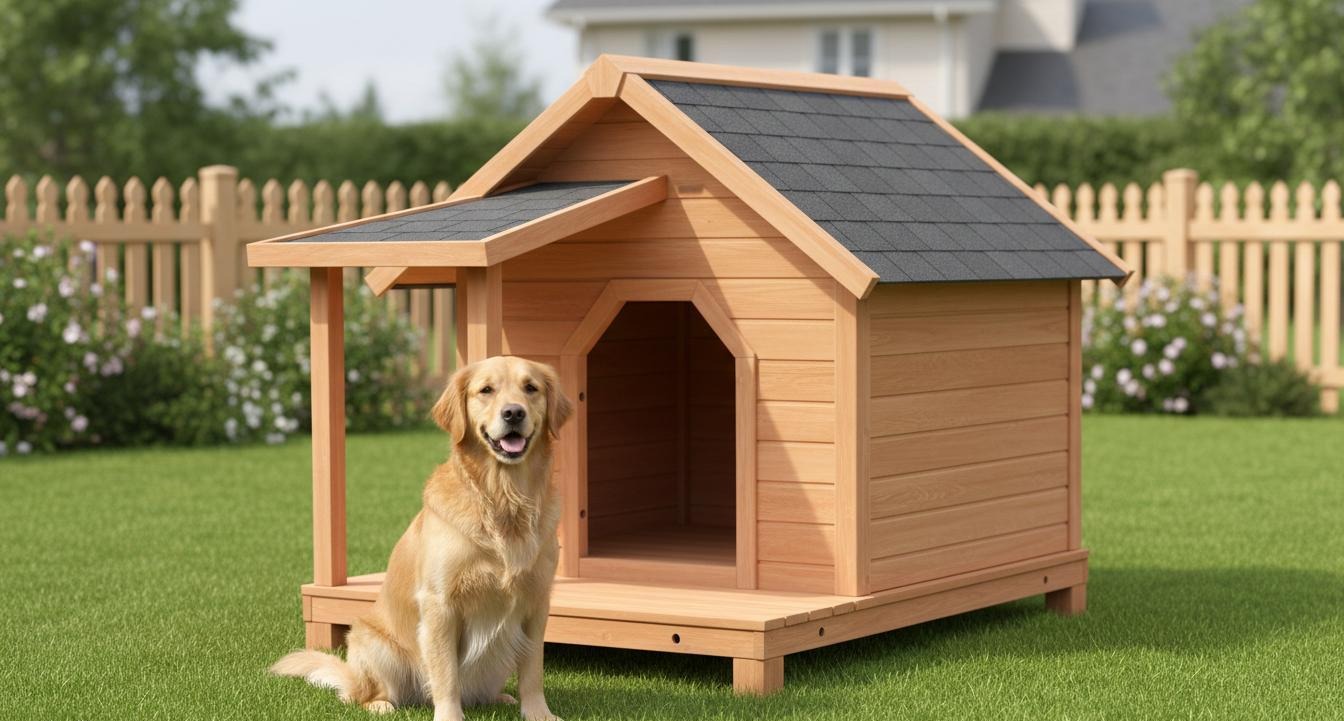
Wooden dog houses are the cornerstone of the premium dog house market. Natural wood construction offers superior thermal insulation compared to plastic or metal alternatives, as wood has a lower thermal conductivity and higher heat capacity per unit thickness. A well-constructed wooden dog house maintains a more stable internal temperature in both hot summer and cold winter conditions, which is a critical factor for pet health and comfort in regions with extreme seasonal temperature swings.
Beyond thermal performance, wooden dog houses offer aesthetic advantages that plastic and metal alternatives cannot match. Wood integrates naturally into garden and landscape environments, aging gracefully over time without the synthetic appearance that can make plastic dog houses look out of place in a naturalistic garden setting. This aesthetic integration is increasingly important to consumers who view their outdoor space as an extension of their home.
Common wood species used in dog house construction include:
Cedar: Western red cedar is the gold standard for premium wooden dog houses. Cedar contains natural oils that resist moisture, decay, and insect damage, giving it inherent durability without the need for chemical treatments. Its pleasant aroma, attractive grain, and lightweight handling characteristics make it a favorite among both manufacturers and consumers. Properly finished western red cedar has a service life of 20–40 years in exterior applications, according to the Western Red Cedar Lumber Association, per WWF sustainable forestry context, making it an excellent investment for consumers seeking long-term value.
Fir and Pine: Fir and pine are more economical wood options that are widely used in mid-market dog house construction. These woods require pressure treatment or surface sealing to achieve adequate weather resistance in exterior applications. Kiln-dried (KD) lumber is preferred for dog house construction as it is less prone to warping, splitting, and moisture absorption than green lumber. When properly treated and maintained, fir and pine dog houses can provide years of reliable service at more accessible price points.
Spruce: Spruce offers a balance of strength and lightweight handling, though it requires more aggressive sealing and maintenance than cedar to achieve adequate exterior durability. Spruce is commonly used in Scandinavian and Nordic dog house designs, which emphasize clean lines and minimalist aesthetics that appeal to consumers with contemporary outdoor living spaces.
Pressure-Treated Lumber: For dog house base frames and structural components that contact the ground, pressure-treated lumber provides superior resistance to rot and insect damage. Quality manufacturers use pressure-treated rails to elevate the main structure above ground level, preventing bottom-wall moisture absorption while creating a stable, level foundation.
Insulated Dog Houses
Insulated dog houses represent the premium tier of the market, designed to maintain stable interior temperatures regardless of external weather conditions. These products are particularly popular in northern climates and among pet owners who keep their dogs outdoors year-round, including in regions where temperatures regularly drop below freezing for extended periods.
Modern insulated dog houses can maintain interior temperatures 15–30 degrees warmer than exterior ambient temperatures, providing meaningful thermal protection for dogs that spend significant time outdoors. This performance level is achieved through several distinct mechanisms:
Double-wall construction: Many premium wooden dog houses feature a double-wall design with a gap between the inner and outer walls. This air gap acts as a thermal buffer, significantly reducing heat transfer through the walls. Some manufacturers fill this cavity with rigid foam insulation (such as expanded polystyrene or EPS) for even greater thermal performance, achieving insulation values comparable to modern building construction.
Reflective insulation panels: Some manufacturers incorporate reflective foil or insulated panel systems into their dog house designs, creating a barrier against radiant heat loss. These panels are particularly effective in cold climates where radiant heat loss from the dog’s body can be substantial. Reflective insulation is lightweight and does not degrade over time the way some fibrous insulation materials can.
Elevated floor construction: A often-overlooked thermal consideration is the floor of the dog house. Premium insulated dog houses typically feature floors elevated above ground level with pressure-treated base rails, creating an air gap beneath the living area that prevents ground cold from penetrating the interior. This design element also improves ventilation and reduces moisture buildup from ground condensation.
Heated dog houses: For extreme climate applications, some manufacturers offer electrically heated dog houses with integrated, low-voltage heating systems. These units typically include thermostatically controlled heating elements that activate when ambient temperatures drop below a set threshold, ensuring that dogs remain comfortable even in the harshest winter conditions. Pet safety standards for heated products require careful attention to electrical safety, chew-resistant cord design, and automatic shutoff mechanisms that prevent overheating.
Weatherproof and All-Season Designs
Weatherproof dog houses are designed to withstand prolonged exposure to the elements without deterioration. The key weatherproofing features to evaluate when sourcing wholesale include:
Roof design: The roof is the most critical weatherproofing element of any dog house. Peaked or sloped roofs are superior to flat roofs because they encourage water runoff and prevent pooling, which is a primary cause of roof leaks in wooden structures. Many premium dog houses feature asphalt shingle roofing over a solid plywood base, providing both excellent weatherproofing and a traditional aesthetic that blends naturally into residential landscapes. Some manufacturers use metal roofing for superior long-term durability and fire resistance.
Waterproof base and floor: Premium dog houses should feature waterproof base rails that keep the structure elevated above wet ground and prevent moisture wicking into the wooden walls. Some manufacturers incorporate plastic or composite base panels that provide complete moisture barriers at the floor level, preventing ground moisture from entering the living space even during flooding events.
UV-resistant finishes: Wooden dog houses exposed to direct sunlight require UV-resistant stain or paint finishes to prevent surface degradation, color fading, and wood fiber breakdown. When sourcing wholesale, verify whether the manufacturer’s standard finish is UV-resistant or whether an upgraded finish package is available. The difference in long-term appearance between UV-resistant and standard finishes can be dramatic after just one season of sun exposure.
Sealed seams and edge trim: Quality weatherproof dog houses feature sealed seams at wall-roof junctions, water-resistant edge trim around door openings, and drip edges along rooflines to channel water away from the structure’s walls. These details may seem small but represent the difference between a dog house that lasts five years and one that lasts twenty.
Plastic and Composite Dog Houses
While wooden dog houses dominate the premium segment, plastic and composite dog houses serve an important role in the value and mid-market segments. Injection-molded high-density polyethylene (HDPE) and polypropylene dog houses offer distinct advantages including:
Low maintenance: Plastic dog houses do not require staining, sealing, or other periodic maintenance that wood structures demand. They can be cleaned with a hose and mild detergent, making them practical for multi-dog households or professional kennel environments.
Insect and rot resistance: Plastic is inherently resistant to insect damage and moisture-related rot, eliminating two of the primary failure modes for wooden dog houses in certain environments.
Consistent quality: Injection molding produces consistent wall thickness and structural properties that can be difficult to achieve with wooden construction, particularly in budget-oriented products.
However, plastic dog houses also have meaningful limitations: they offer poorer thermal insulation than wood, can develop stress cracks over time, and are generally considered less aesthetically compatible with natural landscape environments. Most premium retailers position plastic dog houses as an entry-level or practical option rather than a design-forward choice.
Choosing the Right Dog House Type: A Comparative Analysis
The following table compares the key characteristics of the most common dog house types to assist wholesale buyers in selecting the right assortment mix for their specific customer base:
| Dog House Type | Primary Material | Insulation Value | Weather Resistance | Price Tier | Optimal Channel |
|---|---|---|---|---|---|
| Cedar Dog House (Premium) | Western Red Cedar, 3/4″ walls | Good (natural wood) | Very High (natural oils) | Premium | Pet specialty, garden centers, premium online |
| Insulated Wooden Dog House | Cedar/Fir + Foam Core | Excellent (R-10+) | Very High | Premium Plus | Pet specialty, cold climate retailers |
| Fir/Pine Dog House | Fir or Pine, 1/2″–5/8″ walls | Moderate | Medium to High (with treatment) | Mid-Market | Mass retail, online marketplaces |
| Plastic/Composite Dog House | HDPE/Polypropylene | Low to Moderate | Very High (inherent) | Value | Mass retail, farm and feed stores |
| Heated Dog House (All-Season) | Various + Low-Voltage Heating | Excellent (active + passive) | Very High | Ultra-Premium | Professional kennels, specialty pet, extreme climate |
Key Purchasing Criteria for Wholesale Buyers
When evaluating dog house suppliers for your wholesale program, there are several critical criteria that should inform your vendor selection and product assortment decisions. These criteria go beyond simple price comparison to encompass the full range of factors that determine whether a dog house will perform well in the market and generate positive customer experiences.
Structural Integrity and Build Quality
The structural integrity of a dog house is non-negotiable. A dog house that collapses under snow load, warps after one season of rain, or develops sharp splinters poses safety risks to both pets and their owners—and generates negative reviews that erode brand equity and retail customer confidence. Evaluate the following structural quality indicators when sourcing:
Joinery quality: Premium dog houses feature precision-cut mortise and tenon joints, doweled connections, or tongue-and-groove panel joints rather than toenailed butt joints. These advanced joinery methods resist racking (lateral deformation) and provide superior long-term structural stability that simple nail joints cannot maintain under cyclical environmental stress.
Wall thickness: Exterior-grade wooden dog house walls should be a minimum of 3/4 inch (19mm) thick for adequate thermal mass and structural rigidity. Some premium manufacturers use 1-inch thick walls for maximum insulation and durability, but at minimum, look for walls no thinner than 5/8 inch for mid-market products and 3/4 inch for premium products.
Roof load rating: In regions with significant snowfall, the roof structure must be capable of supporting snow loads without collapsing. Look for dog houses with engineered roof trusses or reinforced roof panels that carry independent load ratings. A roof that fails under snow load not only destroys the product but can potentially injure the dog inside.
Hardware quality: All metal hardware—hinges, bolts, brackets, and fasteners—should be constructed from stainless steel or hot-dip galvanized steel to resist corrosion in outdoor environments. Hinges should be heavy-duty with sufficient leaf width and pin diameter to support repeated opening and closing without failing. Cheap hinges that rust and seize after one season are among the most common consumer complaints in dog house reviews.
Size Selection and Dog Breed Matching
Offering the right size range is essential for meeting the needs of diverse customer bases and reducing costly returns from size mismatches. Dog houses are typically sized according to the target breed, but the most discriminating retailers offer detailed sizing guidance to help customers select appropriately. The general sizing guidelines are:
Small (up to 20 lbs): For breeds such as Chihuahuas, Pomeranians, Yorkshire Terriers, and other small companion breeds. Interior dimensions of approximately 18″ x 24″ are typically appropriate. The door opening should be approximately 8–10 inches wide and 10–12 inches high.
Medium (20–50 lbs): For breeds such as French Bulldogs, Corgis, Beagles, Shiba Inus, and similar medium-sized breeds. Interior dimensions of approximately 22″ x 30″ are typically appropriate. The door opening should be approximately 11–14 inches wide and 14–18 inches high.
Large (50–90 lbs): For breeds such as Labrador Retrievers, Golden Retrievers, German Shepherds, and Boxers. Interior dimensions of approximately 28″ x 36″ are typically appropriate. The door opening should be approximately 16–20 inches wide and 20–24 inches high.
Extra Large (90+ lbs): For breeds such as Great Danes, Mastiffs, Saint Bernards, and other giant breeds. Interior dimensions of approximately 34″ x 44″ or larger. The door opening should be approximately 22–26 inches wide and 26–30 inches high.
Encourage customers to size up where there is any doubt. A dog house that is slightly larger than strictly necessary is preferable to one that is cramped, as dogs should have enough room to stand, turn around, and lie down comfortably. Some manufacturers offer custom sizing for wholesale orders, which is a valuable differentiator for specialty pet retailers serving clients with unusual breed mixes or mixed-breed rescue dogs.
Door Size, Placement, and Weather Protection Features
The doorway is a critical functional element that is frequently overlooked in wholesale purchasing decisions. A properly sized and positioned door opening ensures that dogs can enter and exit comfortably while minimizing heat loss and weather infiltration.
Door height: The door opening should be no more than 1–2 inches taller than the dog’s shoulder height at rest, measured from the ground to the top of the shoulder. This minimizes the volume of cold air that can enter the structure while still allowing the dog to enter comfortably.
Door width: The door width should be approximately 25–50% wider than the dog’s body width at its widest point, measured across the shoulders. This allows the dog to enter and exit without excessive contortion, which is particularly important for older dogs with mobility limitations.
Door placement: For optimal weather protection, the door should be positioned off-center rather than directly in the center of the front wall, creating a natural windward buffer that deflects cold air from entering directly. Some premium designs position the door higher than the floor to further reduce cold air infiltration and prevent water from entering during rain events.
Removable doors and storm panels: Many northern-climate dog houses offer removable doors or clear vinyl storm panels that can be installed during winter months to reduce heat loss while still allowing the dog to see outside and maintaining the psychological comfort of an open entry. This feature adds perceived value and supports premium pricing in cold-climate markets.
Target Market Analysis: Who Is Buying Dog Houses Wholesale?
Understanding the end consumer is as important as understanding the product when building a successful wholesale dog house program. The wholesale customer base for dog houses typically falls into several distinct market segments, each with different priorities, price sensitivity, and product preferences that should inform your assortment and pricing strategy.
Pet Specialty Retail Chains
National and regional pet store chains represent a significant portion of the dog house wholesale market. These retailers typically prioritize branded products with strong consumer recognition, comprehensive warranty coverage, and consistent stock availability. Petco, PetSmart, and independent pet specialty retailers dominate this segment. Products in this segment are typically sold at mid to premium price points, with branding and packaging presentation playing an important role in purchasing decisions.
According to Packaged Facts (via MarketResearch.com), pet specialty retail continues to capture market share from mass-market and online channels, with premium and natural product categories leading growth. This trend suggests that well-branded, premium-positioned dog house products have strong growth potential in this channel.
Garden Centers and Home Improvement Retailers
Garden centers and home improvement retailers such as Home Depot, Lowe’s, and independent garden centers represent an important channel for dog houses that blend functional outdoor furniture aesthetics with pet shelter utility. Customers shopping in these channels are often influenced by the visual appeal of the dog house as a landscape accessory as much as its performance specifications.
This channel rewards dog house designs that feature premium wood species, architectural rooflines, and exterior finishes that complement residential landscaping. Custom color options, stain choices, and branded accessories can drive cross-selling in this channel. The aesthetic integration with outdoor living space is a key purchase driver for consumers in this segment.
Online-Only Retailers and E-Commerce Platforms
The growth of e-commerce has created significant demand for dog houses through online channels including Amazon, Chewy, Wayfair, and direct-to-consumer brand websites. Online retailers typically prioritize products with competitive price points, strong visual presentation (professional photography, 360-degree product views, and detailed specification sheets), and favorable customer review profiles.
For e-commerce wholesale buyers, packaging considerations are paramount. Products must survive the rigors of parcel shipping without damage, which means knockdown (KD) shipping configurations with clear reassembly instructions are standard in this channel. Products that arrive damaged or are difficult to assemble generate negative reviews that can take months to recover from, making packaging quality and assembly simplicity critical supplier evaluation criteria.
Professional Kennels, Breeding Facilities, and Animal Shelters
Professional dog kennels, breeding facilities, and —ASPCA Professional publishes shelter design guidelines that inform product requirements represent a distinct B2B customer segment with specific product requirements. These buyers prioritize durability, ease of cleaning, and value at scale over aesthetic design. Products in this segment typically trade at lower price points but benefit from high reorder frequency and volume stability.
Professional kennels may require custom configurations such as multiple-door access for kennel run setups, connecting corridors between units, raised flooring for easy cleaning and disinfection, and bulk pricing structures that reflect their purchasing volumes. Some shelter operations also require products that can be sanitized with bleach solutions or other harsh chemicals without degrading materials.
Certifications and Compliance for Dog House Wholesale
While dog houses are not subject to the same stringent food-safety regulations as pet feeding bowls, several compliance and certification areas are increasingly important in the modern wholesale market. Understanding these requirements helps you avoid legal pitfalls while positioning your product line as a safe, responsible choice for retailers and end consumers.
ASTM F963 Toy Safety Standard: Although primarily a toy standard, the ASTM F963 standard contains provisions regarding structural safety and hazard assessment that are frequently referenced in product liability litigation involving pet products. Manufacturers that design to this standard demonstrate a commitment to product safety that resonates with risk-averse retail buyers and their legal teams.
APPA Product Safety Guidelines: The American Pet Products Association (APPA) and the Pet Industry Joint Advisory Council (PIJAC) have developed voluntary safety guidelines for pet products that are widely referenced by major retailers in their vendor requirements. Compliance with these guidelines reduces liability exposure and facilitates retailer onboarding processes at major chains.
California Prop 65 Compliance: As with camping cookware, California Proposition 65 warnings may be required for dog houses containing certain wood treatment chemicals, finishes, or composite materials. Wholesale buyers serving California retailers should confirm Prop 65 compliance status with their suppliers before placing orders.
FSC Certification (Forest Stewardship Council): For environmentally conscious retailers and consumers, FSC-certified wood provides assurance that the wood used in dog house construction was sourced from responsibly managed forests that protect biodiversity, indigenous rights, and worker safety. FSC certification is increasingly requested by major retailers in the outdoor living and home improvement channels as part of their sustainability commitments.
UL or ETL Electrical Certification (for heated dog houses): Any electrically heated dog house must carry appropriate electrical safety certification from a nationally recognized testing laboratory such as UL or Intertek (ETL) before it can be legally sold in North American markets. This certification confirms that the heating element, wiring, and controls meet established electrical safety standards.
Selecting and Managing Dog House Wholesale Suppliers
Supplier selection is the most consequential decision in any wholesale program. For dog houses, the manufacturing landscape is primarily concentrated in China, Vietnam, and the United States, with each origin offering distinct advantages in cost, quality, capability, and regulatory environment.
Chinese manufacturing: China remains the dominant source for wooden dog houses in the global wholesale market due to its established wood processing industry, cost-competitive labor, and extensive finishing and packaging capabilities. Chinese manufacturers are particularly strong in mid-market and value segments where price competition is intense. Trade policy considerations, including Section 301 tariffs and potential additional trade actions, should be factored into landed cost calculations for Chinese-origin products.
Vietnamese manufacturing: Vietnam has emerged as an important alternative manufacturing source for wooden dog houses, offering competitive labor costs and a growing base of experienced manufacturers with established quality management systems. Vietnamese products often command a slight quality premium over comparable Chinese products and may benefit from favorable trade treatment under certain preference programs that reduce or eliminate import duties.
North American manufacturing: Some North American retailers specifically seek domestic or nearshore manufacturing for their dog house programs, prioritizing reduced lead times, lower transportation emissions, and brand narratives around local production. Domestic manufacturing typically commands a 30–50% cost premium over comparable Chinese products but may be justified by retailer positioning strategies, customer base preferences, and the ability to market shorter supply chains as a sustainability differentiator.
Supplier Vetting and Qualification
Before committing to a dog house wholesale order of significant size, conduct thorough due diligence on prospective suppliers:
Request production samples: Always request physical samples before placing a production order. Evaluate wood quality, joinery precision, finish adhesion, hardware quality, and packaging robustness. A sample order of 1–3 units per SKU is a standard industry practice that can prevent costly mistakes, particularly with new suppliers whose products you have not previously handled.
Review quality management documentation: Ask suppliers for copies of their quality management system documentation, including inspection protocols, defect tracking processes, and outgoing quality control (OQC) procedures. Suppliers with documented quality management systems typically have more consistent product quality than those operating on an ad hoc basis.
Request third-party test reports: For products intended for the North American market, request test reports from UL, Intertek, or SGS confirming compliance with applicable safety standards. These reports provide independent verification of safety claims that are difficult to verify through visual inspection alone.
Verify social compliance: As with camping cookware, major retailers increasingly require amfori BSCI or Sedex social compliance audits as a condition of vendor onboarding. Confirm your supplier’s current audit status and review the most recent audit report before beginning commercial negotiations.
Market Trends Shaping the Future of Dog House Retail
Several macro trends are currently influencing the dog house market and should inform your wholesale assortment and positioning strategy. Anticipating these trends allows you to position your assortment ahead of competitors and capture emerging demand before it becomes a crowded market segment.
Pet humanization: The trend toward treating pets as family members rather than utility animals continues to drive premiumization across all pet product categories. Dog houses increasingly incorporate features previously found only in —Architectural Digest has documented this trend in their outdoor living features—orthopedic bedding compatibility, climate control integration, and architectural design aesthetics that complement residential outdoor spaces in the same way premium patio furniture does.
Outdoor living expansion: The broader trend toward outdoor living as an extension of the home—accelerated by the COVID-19 pandemic and sustained by changing work patterns that support remote work from home—has created a growing market for high-design outdoor pet products that blend with contemporary patio, deck, and garden aesthetics. Consumers increasingly want their outdoor spaces to be as thoughtfully designed as their indoor spaces.
Sustainability focus: Eco-conscious consumers increasingly seek products made from sustainably sourced wood, non-toxic finishes, and recycled or recyclable materials. Suppliers offering FSC-certified products and low-VOC finishes are gaining preference among environmentally progressive retailers, and this preference is likely to strengthen as sustainability awareness grows across consumer demographics.
Smart pet products: The integration of technology into pet products—including heated dog beds, climate-monitored structures, GPS-enabled pet fences, and connected feeding systems—represents a growing sub-segment that some forward-thinking wholesale buyers are beginning to explore for their premium assortments.
Conclusion: Building a Successful Dog House Wholesale Program
The dog house wholesale market rewards buyers who take a strategic, category-expert approach rather than treating it as a commodity purchasing exercise. Success in this market requires deep knowledge of materials, construction techniques, and regulatory requirements; disciplined supplier qualification and management; and a customer-centric understanding of the distinct needs of each distribution channel.
By carefully selecting products that balance quality, price, and aesthetic appeal; maintaining rigorous compliance and certification standards; and staying attuned to the macro trends reshaping pet ownership and outdoor living, wholesale buyers can build a differentiated and profitable dog house program . We also offer cat supplies wholesale for retailers looking to expand their pet category that serves their retail customers and their end consumers well for years to come.
Explore our complete range of dog house wholesale products or discover our full selection of pet supplies wholesale options pet supplies wholesale options, including pet beds and pet feeders to build a comprehensive, high-margin pet category assortment that serves a wide range of customer segments and retail channels.
About the Author
Zhong Ji
Chief Supply Chain Expert
A Chinese supply chain expert with 30 years of international trade experience, he has in-depth knowledge of 36,000+ high-quality factory resources and leads product development, cross-border procurement and logistics optimization.
Post time: Jun-03-2026