




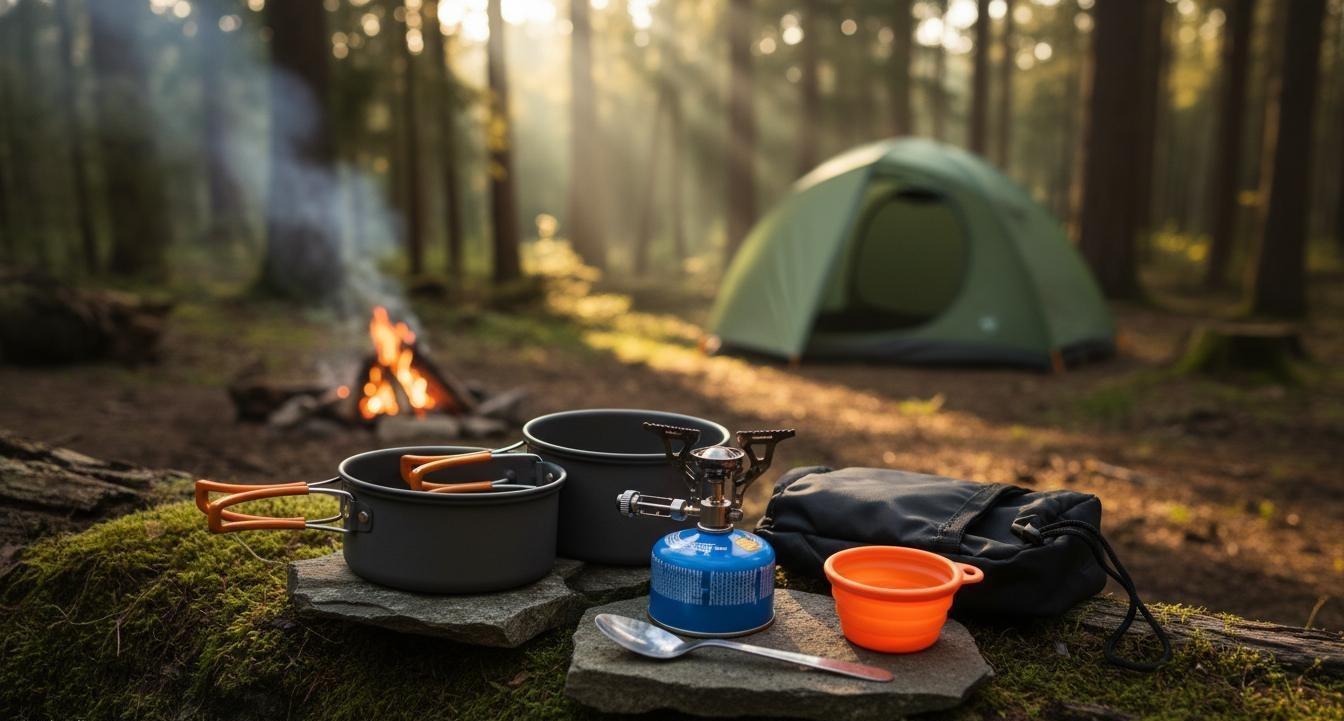
The global outdoor recreation market has experienced unprecedented growth over the past decade, with camping cookware emerging as one of the most resilient and rapidly expanding categories within the broader outdoor equipment industry. According to the latest industry reports, the global camping cookware market is valued at over USD 2.8 billion in 2024 and is projected to grow at a compound annual growth rate (CAGR) of approximately 6.7% through 2032. This growth is driven by a surge in outdoor activities across all demographics, the mainstream adoption of van life culture, increased interest in overlanding and long-distance backpacking, and a fundamental shift in consumer preferences favoring experiences over material goods. The COVID-19 pandemic acted as an unexpected accelerant National Park Service visitor data confirms this outdoor participation surge, introducing millions of new consumers to outdoor recreation who have since become regular participants in camping, hiking, and backpacking activities.
For outdoor outfitters, retailers, and distributors looking to capitalize on this momentum, sourcing camping cookware wholesale presents a compelling and sustainable business opportunity. Whether you operate a chain of outdoor retail stores serving local communities, manage a high-traffic e-commerce platform focused on adventure gear, or supply equipment to campgrounds, guiding services, and corporate outdoor team-building programs, the ability to procure high-quality mess kits, backpacking pot sets, and related cooking accessories at competitive wholesale prices is essential to maintaining healthy margins and meeting the evolving demands of your diverse customer base.
This comprehensive guide dives deep into everything you need to know about purchasing camping cookware at scale—from understanding the intricate product landscape and material science to navigating the complex web of certifications, minimum order quantities, and international logistics. By the end of this article, you will have a clear strategic roadmap for building a wholesale procurement operation that is both cost-effective and aligned with the quality standards your end customers expect and demand.
Understanding the Camping Cookware Product Landscape
The camping cookware category encompasses a wide variety of products designed for outdoor food preparation, ranging from ultralight titanium pots favored by thru-hikers covering thousands of trail miles to rugged cast iron skillets that deliver home-cooked meals at the most remote campsites accessible by vehicle. Before placing your first wholesale order, it is essential to understand the distinct sub-categories and their target use cases, as each carries different margin profiles, shelf-life expectations, and customer personas that should inform your purchasing decisions.
Understanding the full breadth of the product landscape also helps you communicate more effectively with your end customers. A retailer who understands the technical differences between a hard-anodized aluminum mess kit and a titanium backpacking pot set is better equipped to match the right product to each customer’s specific use case, resulting in fewer returns, higher customer satisfaction scores, and stronger conversion rates.
Mess Kits: The All-in-One Solution for Outdoor Dining
A mess kit is a compact, multi-piece outdoor cookware set typically consisting of a pot with a lid, a frying pan or plate, a handle or bail, and often a nested bowl, cup, or utensils—all designed to nest together into a single compact unit. Mess kits are prized for their portability and versatility, making them one of the best-selling categories in camping cookware wholesale and one of the first products new campers purchase when building their outdoor kitchen.
Retail consumers favor mess kits because they consolidate multiple pieces of cookware into a single compact unit that fits easily in a backpack or attach to the outside of a pack using carabiners or compression straps. The convenience factor cannot be overstated—everything you need to boil water, cook a simple meal, and eat that meal from the same piece of cookware is consolidated into one lightweight package.
Wholesale buyers appreciate mess kits because they are typically sold as complete sets, simplifying inventory management. Industry data from SGIA provides benchmarking for print and packaging quality standards and reducing the per-unit complexity of kitting and packaging. The most popular mess kit configurations include nesting sets made from anodized aluminum, stainless steel, or hard-anodized aluminum with nonstick coatings. Premium mess kits may also incorporate heat-resistant silicone lids and foldaway handles that reduce packed volume even further.
When sourcing mess kits wholesale, pay close attention to the number of pieces per set, the material composition of each component, the quality of the nonstick coating (if applicable), and whether the set includes carrying bags, stuff sacks, or carabiner attachments. Sets that come with durable storage sacks or carabiner-compatible loops for attachment to the outside of a pack command higher retail price points and tend to generate stronger customer reviews. Quality carabiners and attachment hardware are small components that significantly affect perceived product quality.
Backpacking Pot Sets: Engineered for Weight and Thermal Efficiency
Backpacking pot sets are purpose-built for lightweight outdoor travel where every gram matters. Unlike mess kits, which prioritize versatility and multi-functionality, backpacking pot sets are engineered to minimize weight while maximizing thermal efficiency. These sets typically consist of one or two nesting pots made from ultralight titanium, hard-anodized aluminum, or stainless steel, often paired with a bail handle, a lid that doubles as a frying pan or plate, and a stuff sack.
The backpacking segment is one of the fastest-growing within the camping cookware market, driven by the explosive popularity of long-distance trails such as the Appalachian Trail, the Pacific Crest Trail, and the Via Alpina in Europe. Thru-hikers and weekend backpackers alike prioritize gear weight above almost all other factors, which means that ultra-lightweight titanium pot sets—despite their higher wholesale cost—enjoy strong demand and healthy retail margins.
When sourcing backpacking pot sets wholesale, consider the thermal performance characteristics of each material. Hard-anodized aluminum offers excellent heat distribution and durability at a mid-range price point, making it the most popular material for mainstream backpacking pot sets. Titanium, while more expensive, provides a superior strength-to-weight ratio and is virtually indestructible—qualities that appeal to serious backcountry travelers willing to pay a premium for gear that will last a lifetime of heavy use.
Camping Kettles, Coffee Pots, and Specialized Beverage Vessels
No camping cookware lineup is complete without specialized vessels for beverage preparation. Camping kettles and backpacking coffee pots are among the most frequently requested items at outdoor retail stores, particularly among the growing demographic of outdoor coffee enthusiasts who insist on quality caffeination even in the most remote backcountry locations.
The ritual of morning coffee has migrated into the outdoors with remarkable intensity. Specialty coffee culture—single-origin beans, precise grinding, and temperature-controlled extraction—has influenced how outdoor enthusiasts approach their morning brew. Products that facilitate a better coffee experience in the outdoors command significant consumer interest and strong retail margins.
Wholesale buyers should consider stocking a range of kettle and coffee pot options spanning different fuel types (traditional open-flame compatible, canister stove compatible, and integrated windproof designs), capacities (from 500ml single-serve vessels to 1.5L group-sized kettles), and materials. Stainless steel kettles are favored for their durability and even heating characteristics, while titanium models appeal to the ultralight crowd and can command premium retail prices. Hard-anodized aluminum provides an excellent middle ground with good thermal performance at moderate weight and price points.
Material Selection: A Deep Dive into Camping Cookware Materials
The material chosen for camping cookware has a direct, measurable impact on product performance, retail price point, wholesale cost, durability, weight, and thermal efficiency. A thorough understanding of material properties is essential for making informed wholesale purchasing decisions that balance cost, quality, and market positioning across your product assortment.
The following table provides a comprehensive side-by-side comparison of the most common materials used in camping cookware:
| Material | Weight | Durability | Thermal Efficiency | Cost Level | Nonstick Options |
|---|---|---|---|---|---|
| Hard-Anodized Aluminum | Light to Medium | High | Excellent | Mid | Yes |
| Titanium (Grade A) | Very Light | Very High | Good | High | Limited |
| Stainless Steel | Heavy | Very High | Moderate | Low to Mid | Yes |
| Cast Iron | Very Heavy | Extremely High | Excellent | Low to Mid | Yes (Seasoned) |
| Aluminum (Standard) | Light | Medium | Good | Low | Yes |
| Silicone | Very Light | Medium | Moderate | Low | Yes |
Hard-anodized aluminum represents the sweet spot for most outdoor retailers. It delivers excellent thermal conductivity for efficient cooking, high durability that resists scratches and corrosion from outdoor use and cleaning, and the ability to apply nonstick coatings without the health concerns associated with some older nonstick technologies. For the premium segment, titanium pots continue to gain market share, particularly among the ultralight backpacking community and long-distance thru-hiker demographic.
Stainless steel and cast iron serve distinct and important niches. Cast iron camping skillets remain popular for car camping and base camping setups where weight is not a constraint and where the superior heat retention of cast iron produces superior searing and cooking results for everything from pancakes to steaks. Stainless steel offers a middle ground but faces increasing competition from hard-anodized alternatives that offer similar durability at significantly lower weight.
Nonstick Coatings: Navigating Safety, Performance, and Regulatory Standards
The topic of nonstick coatings in camping cookware deserves special attention given the evolving regulatory landscape and heightened consumer awareness around PFAS chemicals. Traditional polytetrafluoroethylene (PTFE) nonstick coatings, most famously associated with the Teflon brand, have faced increasing scrutiny due to environmental and health concerns related to perfluorinated compounds that have been detected in water systems, wildlife, and human blood samples globally.
Several jurisdictions—including the European Union under REACH regulation and the state of California under California’s Safer Cookware Program—have moved to restrict or phase out certain PFAS compounds in consumer products. For wholesale buyers, this regulatory environment creates both risk and opportunity that must be actively managed.
On the risk side, retailers and distributors must ensure that any camping cookware purchased wholesale complies with applicable regulations in their target markets. Stock that is later found to contain restricted compounds can result in costly recalls, significant reputational damage, and potentially devastating legal liability exposure.
On the opportunity side, manufacturers that have proactively transitioned to PFAS-free nonstick coatings—including ceramic-based, silicon-based, and next-generation PTFE alternatives—an approach now endorsed by the Cookware Manufacturers Association for sustainable production—are well-positioned to capture market share as consumer awareness grows. Wholesale buyers should actively seek out suppliers offering PFAS-free options, particularly for the European and North American markets where regulatory pressure is strongest and consumer awareness is highest.
Minimum Order Quantities, Pricing Structures, and Trade Terms
Wholesale purchasing terms vary significantly across suppliers, and understanding the typical minimum order quantity (MOQ) structures is essential for managing cash flow and inventory risk effectively. Rushing into large orders without understanding these structures has destroyed more than one wholesale business. The following are the most common wholesale pricing tiers encountered in the camping cookware market:
Sample Orders: Most manufacturers and primary distributors offer sample orders ranging from 1 to 5 units per SKU at or near retail pricing. Sample orders allow you to physically evaluate product quality, packaging, fit-and-finish, and actual weight before committing to larger volumes. This is a critical step that should never be skipped, especially when working with new suppliers whose product quality you have not yet been able to verify in person.
Stock Orders (Mixed SKU): Standard wholesale orders typically start at MOQs of 50 to 200 units per SKU, with total order values commonly ranging from USD 2,000 to USD 10,000. Many suppliers offer tiered pricing where the per-unit cost decreases meaningfully as order quantities increase. A typical tier structure might look like this: 50–199 units at list price, 200–499 units at 8–12% discount, 500–999 units at 15–20% discount, and 1,000+ units at 20–30% discount.
Container Orders: For large-scale distributors and retail chains, full-container orders (20-foot or 40-foot containers) represent the most cost-effective procurement channel. Container orders typically yield savings of 30–40% compared to standard wholesale pricing, but require substantial capital commitment and storage capacity. A 20-foot container can hold approximately 800 to 1,500 units of camping cookware depending on product dimensions and packaging density.
When negotiating wholesale terms, do not focus exclusively on unit price. Equally important are payment terms (letters of credit vs. open account), lead times (which can range from 30 days for in-stock items to 90–120 days for custom production), tooling costs for custom colors or logo imprinting, packaging customization options, and the supplier’s willingness to hold safety stock for reorder fulfillment.
Certifications Every Outdoor Retailer and Wholesale Buyer Should Require
Compliance with safety and quality certifications is non-negotiable for any serious outdoor cookware wholesale procurement operation. These certifications serve two critical functions: they provide legal market access in most developed economies, and they signal to end consumers that the products meet established safety and performance standards.
The following certifications should be considered mandatory for any camping cookware entering the North American or European markets:
FDA Food-Grade Compliance (USA): All camping cookware intended for food contact must comply with FDA regulations for food-contact substances. This is particularly important for pots, pans, kettles, and any vessel used for food preparation. Suppliers should provide FDA-compliant material declarations and, where applicable, test reports from accredited laboratories.
EU Food-Grade Regulation (EC 1935/2004): For products sold in the European Union, compliance with Regulation (EC) No 1935/2004 on materials intended to come into contact with food is mandatory. This regulation sets out the general principles for food-contact materials across all EU member states and serves as the baseline standard for food safety across Europe.
California Proposition 65 (Prop 65): California residents have the right to know about significant exposures to chemicals known to cause cancer, birth defects, or other reproductive harms. Proposition 65 requires businesses to provide clear and reasonable warnings before exposing individuals to listed chemicals. Many retailers, particularly those in California or serving California customers, will only stock products with Prop 65 compliance documentation.
LFGB Food Safety Testing (Germany): The German Lebensmittel- und Futtermittelgesetzbuch (LFGB) standard is among the most stringent food safety standards in Europe. Products that pass LFGB testing are widely accepted across European markets and often command a quality premium in the marketplace.
BPA-Free and Phthalate-Free Declarations: While not always legally mandatory, certifications confirming the absence of bisphenol A (BPA) and phthalates have become de facto requirements in the outdoor retail market. Consumers are increasingly attentive to these concerns, and major outdoor retail chains routinely require supplier declarations as a condition of doing business.
BSCI or Sedex Social Audits: For international wholesale buyers, social compliance audits such as amfori BSCI or Sedex are increasingly important. These audits assess labor practices, workplace safety, and ethical standards at manufacturing facilities. Major retailers in North America and Europe require social compliance documentation as part of vendor onboarding programs.
Logistics: Getting Your Wholesale Orders from Factory to Shelf
Supply chain logistics is one of the most complex and consequential aspects of international camping cookware wholesale procurement. Even the most competitively priced goods can become uneconomical if freight costs, customs procedures, and last-mile delivery are not managed effectively. A thorough understanding of the logistics landscape is essential for building a sustainable and profitable wholesale operation.
Incoterms and Responsibility Allocation
The Incoterms (International Commercial Terms) published by the International Chamber of Commerce define the responsibilities of buyers and sellers in international trade. The most common Incoterms encountered in camping cookware wholesale are:
EXW (Ex Works): The buyer assumes all risk and cost from the point of origin. This term gives buyers maximum control but also maximum logistical complexity. The buyer must arrange all transportation, export documentation, and customs procedures. EXW is rarely the best choice for first-time international buyers.
FOB (Free on Board): The seller covers the cost and risk up to the point of loading onto the vessel at the port of origin. The buyer assumes risk from the moment the goods are loaded onto the vessel. FOB is the most common term for containerized camping cookware shipments from Asia and provides a good balance of seller responsibility and buyer control.
CIF (Cost, Insurance and Freight): The seller covers cost, insurance, and freight to the destination port. While convenient, CIF arrangements can make it harder for buyers to optimize shipping solutions and verify insurance coverage is adequate.
DDP (Delivered Duty Paid): The seller delivers the goods to the destination, cleared for import, and pays all applicable duties and taxes. DDP terms simplify the buying experience but typically result in higher landed costs as the seller factors their risk and administrative costs into the freight charge.
Freight Mode Selection
For camping cookware wholesale shipments from manufacturing hubs in China, Vietnam, and other Asian production centers, the choice of freight mode has a significant impact on both cost and delivery timeline:
Sea Freight (FCL or LCL): Full Container Load (FCL) shipping remains the most cost-effective mode for high-volume wholesale orders. A 40-foot container from Shanghai or Shenzhen. Freightos Baltic Index provides real-time container shipping rate benchmarks for international trade to major North American West Coast ports typically costs between USD 2,000 and USD 5,000 in current market conditions, though rates fluctuate seasonally and geopolitically. Less than Container Load (LCL) shipping is an option for smaller orders but involves higher per-unit costs, greater handling risk, and longer transit times.
Air Freight: Air shipping is reserved for urgent replenishment orders, premium product lines, or samples. While air freight costs have moderated since pandemic-era peaks, they remain approximately 4–8 times more expensive than sea freight on a per-kilogram basis and are generally not economical for standard camping cookware products.
Express Courier: Services such as DHL Express, FedEx, and UPS are useful for sample orders and small-volume shipments but are prohibitively expensive for standard wholesale volumes and impractical for anything beyond urgent small parcels.
Customs, Duties, and Import Compliance
Camping cookware imported into the United States typically falls under Harmonized Tariff Schedule (HTS) codes in the 9604.00, 7323.00, or 7615.00 series depending on the specific product and material composition. Understanding the applicable HTS codes is essential for accurate duty calculation and customs compliance.
For camping cookware from China, the Section 301 tariffs imposed by the United States have a significant impact on landed costs. Many outdoor cookware products have been subject to additional duties of 7.5% to 25%, and wholesale buyers must factor these tariffs into their pricing models from the outset to avoid margin compression that was not anticipated in the purchasing plan.
In the European Union, the Common External Tariff applies to camping cookware imports, with duty rates typically ranging from 2.7% to 6.5% depending on the product category. Importers should also ensure compliance with EU REACH chemical safety regulations.
Warehousing and Last-Mile Distribution
Effective warehousing strategy is a key differentiator for successful wholesale operations. Several models are commonly used:
Domestic 3PL (Third-Party Logistics): Many small to mid-sized wholesale buyers partner with third-party logistics providers to handle receiving, storage, pick-and-pack, and fulfillment. This model minimizes capital tied up in warehouse real estate and provides scalable capacity, but introduces a margin layer and requires careful and systematic 3PL partner selection.
Distributed Regional Warehousing: For larger operations covering geographically dispersed retail footprints, distributed warehousing—with inventory held in multiple regional fulfillment centers—reduces last-mile shipping costs and delivery times significantly. This approach requires more sophisticated inventory management but yields substantial savings on outbound freight.
DTC (Direct-to-Consumer) Hybrid Model: Some wholesale operators combine their B2B wholesale business with a DTC e-commerce channel, using a shared inventory pool managed through a single warehouse. This model offers operational simplicity but requires robust inventory allocation logic to prevent stockouts in either channel.
Building a Diverse and Resilient Supplier Portfolio
One of the most important strategic decisions in camping cookware wholesale is supplier selection and management. The global camping cookware manufacturing landscape is concentrated in a relatively small number of production hubs, with China accounting for the majority of global output, followed by Vietnam, India, South Korea, and Taiwan. Each origin offers distinct advantages in cost, quality, capability, and regulatory environment.
When building your supplier portfolio, consider the following best practices that distinguish successful wholesale buyers from those who struggle with supply chain disruptions:
Diversify across production regions: Geopolitical disruptions, trade policy changes, and natural disasters can affect supply chains concentrated in a single country. Maintaining relationships with suppliers in at least two different production regions provides a critical buffer against supply shocks. The geopolitical dynamics in the Asia-Pacific region make this diversification particularly relevant for camping cookware buyers.
Qualify suppliers systematically: Implement a rigorous vendor qualification process that evaluates prospective suppliers across dimensions including manufacturing capability, quality management systems, certifications, financial stability, production capacity, and communication responsiveness. On-site or virtual factory audits should be standard practice for orders exceeding USD 50,000.
Maintain regular communication: Wholesale relationships are partnerships. Regular communication with suppliers regarding production schedules, inventory levels, quality feedback, and market trends builds mutual trust and positions you for priority fulfillment during tight supply periods.
Product Development and Customization Opportunities
One of the most effective ways to differentiate your wholesale offering and build lasting customer loyalty is through exclusive product development. By working directly with manufacturers on custom configurations—unique colorways, proprietary handle designs, custom logo printing, exclusive stuff sack materials, or proprietary nonstick formulations—you can create products that are unavailable from competitors.
Customization opportunities in camping cookware span a wide range of options:
Color and finish customization: Most manufacturers offer Pantone-matched color options for anodized aluminum products. Custom colors are typically achievable at MOQs of 500–1,000 units per colorway and allow retailers to offer exclusive products that cannot be compared directly with competitors’ offerings.
Logo and branding imprinting: Screen printing, laser engraving, and pad printing are all commonly available services from established camping cookware manufacturers. Embossed or debossed logos on handles and lids are also options for premium product tiers.
Packaging customization: Custom retail packaging—including branded boxes, hang tags, care instruction cards, and retail-ready display packaging—can significantly enhance perceived value and support premium pricing strategies.
Feature customization: Working with manufacturers to modify existing product designs—such as adding measurement markings, adjusting pot capacity, modifying lid fit, or incorporating heat-resistant silicone grips—allows you to create differentiated products tailored to your specific customer base.
Market Trends Shaping the Future of Camping Cookware
Staying ahead of market trends is essential for wholesale buyers who want to anticipate demand and stock the products most likely to resonate with end consumers. Several macro trends are currently reshaping the camping cookware market:
The ultralight revolution: Every generation of backpackers seems to push gear weight expectations lower. This trend is driving demand for titanium cookware, collapsible silicone pots, and multi-functional minimalist tools. Weight is consistently cited as the top purchase criteria for backcountry cooking equipment in industry surveys.
Sustainability and eco-consciousness: Today’s outdoor consumers are increasingly concerned about the environmental footprint of their gear. Products made from recycled materials, manufactured using renewable energy, or designed for extreme longevity are resonating with a growing market segment. Suppliers that can provide sustainability certifications are increasingly preferred by wholesale buyers.
Overlanding and car camping boom: The overlanding movement—self-reliant travel by vehicle to remote destinations—has exploded in popularity across North America, Australia, and parts of Europe. Overlanders typically prioritize cooking comfort and capability over weight, creating demand for high-quality cast iron, stainless steel, and large-capacity aluminum cookware sets that would be impractical for backpacking.
Diversity in outdoor gear: The outdoor industry is increasingly recognizing the need for gear designed for diverse body types and use cases. This cultural shift is creating opportunities for wholesale buyers to stock products that address previously underserved segments of the outdoor recreation market.
Conclusion: Building Your Competitive Advantage in Camping Cookware Wholesale
The camping cookware wholesale market offers substantial opportunity for retailers, distributors, and e-commerce operators who approach it with strategic sophistication and operational discipline. Success in this space requires more than simply finding the lowest unit price. It demands a nuanced understanding of product categories and materials, rigorous attention to compliance and certifications, proactive logistics management, and the ability to anticipate and respond to shifting consumer preferences and regulatory requirements.
By investing the time to build strong supplier relationships, diversify your product mix across materials and price tiers, maintain a sharp focus on compliance, and stay attuned to the macro trends reshaping the outdoor recreation market, you can position your wholesale business for sustained growth and profitability in the years ahead.
Ready to source your next camping cookware order? Explore our full range of camping cookware wholesale products and discover how our global supply chain expertise can support your outdoor retail business. For additional insights on outdoor gear procurement, browse our comprehensive guides to hiking and camping equipment sourcing. hiking and camping equipment sourcing. Our team also specializes in camping tent wholesale and sleeping gear for complete outdoor category coverage.
About the Author
Zhong Ji
Chief Supply Chain Expert
A Chinese supply chain expert with 30 years of international trade experience, he has in-depth knowledge of 36,000+ high-quality factory resources and leads product development, cross-border procurement and logistics optimization.
Post time: Jun-02-2026