




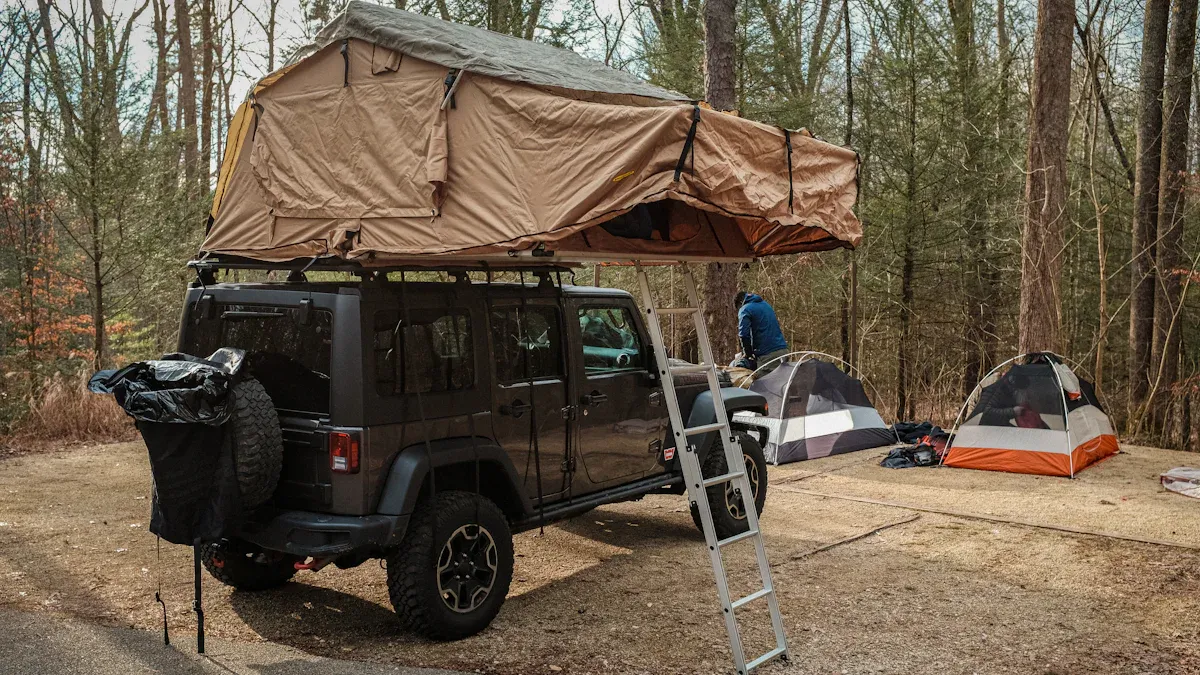
A truck bed tent faces tough weather, but simple habits make a big difference. Regular cleaning keeps dirt away and helps the tent last longer. Drying the tent after each trip stops mold and mildew. Many campers choose tent accessories to boost comfort. Here’s how these steps help:
- Drying prevents mold, mildew, and odors, which damage fabric and health.
- Cleaning with mild soap keeps the tent looking great and strong.
- Good airflow inside stops moisture from hurting the tent outdoor.
- Storing the tent off the ground protects it from wet spots.
- Checking waterproofing keeps water out and shields against sun damage.
He can rely on these habits for family camping tents or any truck tent adventure.
Key Takeaways
- Clean and dry your truck bed tent after every trip to prevent mold, mildew, and fabric damage.
- Check and reapply waterproofing regularly to keep water out and protect the tent from sun damage.
- Store the tent completely dry, off the ground, and in a cool, ventilated place to avoid moisture and wear.
Cleaning and Drying Your Truck Bed Tent
Removing Dirt and Debris
Keeping a truck bed tent clean starts with removing dirt and debris after every trip. He should gather a hose, a bucket, cool water, mild detergent, and a soft sponge. First, sweep away loose dirt, leaves, and sticks from the tent’s doors, body, and floor. Next, lay the tent flat on a grassy area or tarp, not on rough concrete. Rinse both the inside and outside, checking zipper tracks for sand or gravel. For stubborn stains, a tent-specific cleaner works best. Scrub gently with a sponge, and for tough spots, soak the tent in cool water. Regular cleaning after each adventure helps prevent dirt buildup and keeps the tent in top shape.
Drying to Prevent Mold and Mildew
Drying the tent well is just as important as cleaning. After washing, he should open the tent fully and let it air out. Wipe away any damp spots with a towel. Setting the tent in a sunny or breezy spot helps it dry faster. Even during the off-season, airing out the tent by setting it up and unzipping windows keeps musty smells away. He should always store the tent completely dry, off the ground, and in a cool, dry place. If mold appears, a little white vinegar can help remove it and freshen the fabric.
Tip: Soft shell tents need extra attention to drying because they hold moisture longer than hard shell tents.
Cleaning Tips for Different Tent Materials
Different tent materials need different care. Canvas tents, made from cotton, shrink when wet, so seasoning them before first use helps. He should avoid pressure washers and harsh detergents on canvas. Instead, use warm water, mild soap, and a soft brush. For nylon or polyester tents, spot cleaning with liquid detergent works well. Power washers can be used on synthetic tents, but only on the lowest setting. No matter the material, he should always rinse well and dry the tent completely before packing it away. This keeps the truck bed tent ready for the next adventure.
Waterproofing and Weatherproofing Your Truck Bed Tent

When and How to Reapply Waterproofing Treatments
He should check the tent’s waterproofing at least once a season. If water stops beading on the fabric or leaks appear, it is time to reapply a waterproofing spray. He can set up the tent in a dry, shaded spot. Clean the fabric first, then spray a waterproofing treatment evenly over the surface. Let it dry fully before packing it away. Most campers find that reapplying after heavy rain or long trips keeps the tent ready for any weather.
Tip: Always test a small area first to make sure the spray does not change the color or texture of the tent.
Choosing the Right Waterproofing Products
Not all waterproofing products work the same. Outdoor gear experts recommend checking the tent’s material before buying a treatment. Some tents, like the Thule Basin Wedge, use coated cotton polyester with a 1500mm waterproof rating. This makes them strong for year-round use. Others, like the Rightline Gear Truck Tent, use sealed seams and waterproof polyester for three-season camping. The Rev Pick-Up Tent by C6 Outdoors has a dual-layer fly for four-season protection. He can compare popular options in the table below:
| Truck Bed Tent | Waterproof Features | Expert Rating/Notes |
|---|---|---|
| Thule Basin Wedge | 260g coated cotton polyester, 1500mm rating | 4.5/5, durable, year-round use |
| Rightline Gear Truck Tent | Sealed seams, waterproof polyester | Good for three seasons, some gaps near tailgate |
| Rev Pick-Up Tent by C6 Outdoors | Fully coated dual-layer fly | Four-season, strong waterproofing |
| Guide Gear Compact Truck Tent | Water-resistant polyester, unsealed seams | Light rain only, not for harsh weather |
Sealing Seams and Zippers
Seams and zippers often let water sneak inside. He should inspect these areas before every trip. A seam sealer made for tents can block leaks. He can brush it along the inside seams and let it dry. For zippers, he should use a zipper lubricant to keep them moving smoothly and stop water from getting through. Regular care helps the tent stay dry, even in heavy rain.
Proper Storage for Your Truck Bed Tent
Storing the Tent Completely Dry
He should always make sure the tent is totally dry before packing it away. Even a little moisture can cause mold and mildew to grow. These can weaken the fabric, create bad smells, and even ruin the tent for good. After each trip, he can set up the tent in a sunny or breezy spot to help it dry faster. Packing a damp tent into its bag traps moisture inside, which makes things worse. For extra protection, he can toss a few silica gel packets into the storage bag to soak up any leftover humidity.
Tip: Never use a plastic bag for storage. Plastic traps moisture and encourages mold.
Keeping the Tent Elevated and Ventilated
He should avoid storing the tent directly on the floor. Floors can hide damp spots that lead to fabric rot or attract bugs. Instead, he can place the tent on a shelf or hang it from the ceiling using a pulley system. This keeps air moving around the tent and helps prevent moisture buildup. Using a breathable storage bag also lets air flow and keeps the tent fresh. A dehumidifier in the storage area can help keep things dry, especially in humid climates.
- Store the tent off the ground.
- Use a breathable bag.
- Keep the storage area dry and airy.
Avoiding Sunlight and Extreme Temperatures
He should pick a cool, dry place for storage, like a garage or closet. Sunlight can fade the tent’s colors and weaken the fabric over time. Extreme heat or cold can also damage the tent’s materials, making them brittle or sticky. By keeping the tent away from windows, heaters, and damp basements, he helps it last longer. Regular checks for wear and tear before storing also help catch small problems early.
Note: Careful storage keeps the Truck Bed Tent ready for the next adventure and helps it last for years.
Regular Inspections and Repairs for Truck Bed Tents
Checking for Tears, Holes, and Wear
He should check his tent for damage after every trip and before putting it away. Regular inspections help catch small problems before they become big ones. Most damage shows up as holes, tears, or worn spots. The table below shows common types of wear and what to look for:
| Wear and Tear Type | Cause / Description | Inspection Focus / Notes |
|---|---|---|
| Edge Wear and Tear | Flapping and rubbing, especially along rear edges | Check edges for wear in high-pressure areas |
| Punctures or Tears | Sharp edges on the truck bed can puncture or tear the material | Inspect for holes near sharp edges; use edge protectors |
| Damage from Improper Securing | Loose straps or clips can cause shifting and material damage | Make sure securing methods are tight |
| Material Fatigue and Worn Spots | General wear from use and exposure | Look for worn-out areas and repair quickly |
| Neglected Edge Protection | No edge protectors increases risk of tearing at contact points | Use edge protectors to prevent damage |
Maintaining Zippers and Seams
Zippers and seams need special care to keep water out. He should brush off dirt from zippers and clean the teeth with water and a toothbrush. If a zipper sticks, he can gently straighten bent coils or tighten worn sliders with pliers. For seams, he should clean them with a damp sponge and apply seam sealer when needed. If seam tape peels, he can remove it, clean the area, and reseal. Let the tent dry overnight before packing it up.
Tip: Avoid using lubricants on zippers because they attract grit and cause more problems.
Repairing Small Issues Before They Grow
Fixing small problems right away keeps the Truck Bed Tent strong. He should clean damaged spots before repairing them. Heavy-duty tape works for small tears, while patches or stitching help with bigger holes. After repairs, let the area set for a day or two. He should always check repaired spots before the next trip. Early repairs stop damage from spreading and help the tent last longer in harsh weather.
Smart Setup and Takedown of Your Truck Bed Tent
Setting Up on Clean, Level Surfaces
He should always start by picking a clean, flat spot for his truck. This helps the Truck Bed Tent stay stable and dry. Setting up on a level surface keeps the tent from shifting or sagging. It also stops water from pooling under the tent during rain. Before setting up, he can sweep away rocks, sticks, or trash from the truck bed. This prevents rips and keeps the tent floor in good shape. Some tents have sewn-in floors or waterproof fabrics, which add extra protection against dirt and moisture. By choosing a solid, stable spot, he helps the tent last longer and keeps his camping gear safe.
Tip: Elevating the tent off the ground avoids cold, damp, or rough terrain that can damage the tent.
Avoiding Damage During Bad Weather
Bad weather can test any tent. He should always follow the manufacturer’s instructions for setup. This keeps the tent strong and safe. He needs to secure all guy lines and stakes tightly. Anchoring the tent helps it stand up to strong winds. Lowering the tent profile, when possible, reduces wind resistance. He should avoid setting up on mountaintops, open fields, or near cliffs. These spots get hit hardest by wind and storms. Clearing the area of debris also helps. He should use rainflies or waterproof covers to keep rain out. Checking the weather forecast before camping helps him avoid dangerous conditions.
Key steps for stormy weather:
- Follow setup instructions closely.
- Anchor guy lines and stakes.
- Lower the tent profile if possible.
- Pick safe, sheltered spots.
- Use rainflies and covers.
Packing Up Carefully When Wet
Sometimes, he must pack up the tent while it’s still wet. He should shake off as much water as possible before folding it. When he gets home, he needs to set up the tent again and let it dry fully. Storing a wet tent can cause mold, mildew, and fabric damage. Airing out the tent inside and out removes leftover moisture. Direct sunlight and good airflow help the tent dry faster. He should never store the tent in a bag if it’s damp. Treating seams with waterproofing spray after drying keeps the tent ready for the next trip.
Note: Always dry the tent completely before storing to prevent long-term damage.
He can keep his Truck Bed Tent ready for any adventure by making cleaning, drying, and regular checks a habit. These steps help avoid costly replacements, reduce waste, and keep the tent strong in harsh weather.
- Cleaning off dirt and drying the tent stops damage and mold.
- Storing it right and fixing small issues early saves money and helps the environment.
FAQ
How often should he clean his truck bed tent?
He should clean the tent after every trip. Regular cleaning keeps the fabric strong and helps prevent mold or bad smells.
Can he use regular soap to wash the tent?
He should use mild soap or a tent-specific cleaner. Harsh soaps can damage the fabric or waterproof coating.
What should he do if the tent gets wet during storage?
He should set up the tent as soon as possible and let it dry completely. This step helps stop mold and keeps the tent fresh.
Tip: Always check for damp spots before packing the tent away.
Post time: Jul-30-2025