





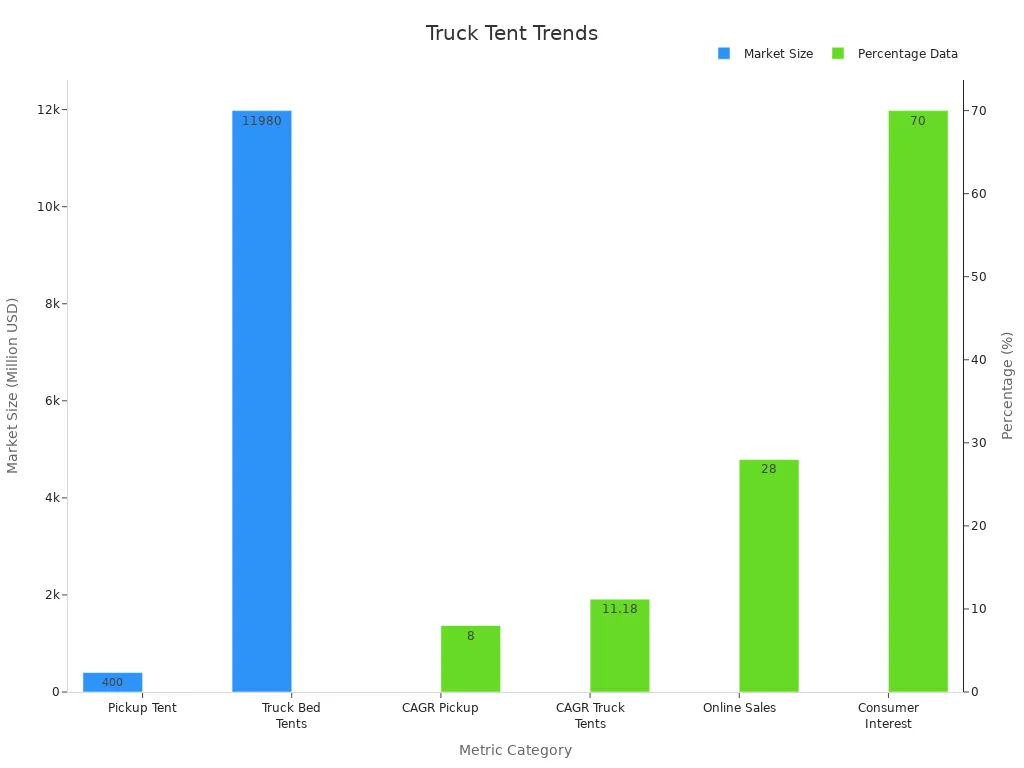
A truck tent can turn a pickup into a cozy campsite in minutes. Many campers in 2025 see comfort, convenience, and safety as big wins. Sleeping off the ground helps people avoid soggy mornings and curious critters. Space can feel tight, and setup depends on the truck’s size. Mobility sometimes takes a hit, too. Young outdoor fans love truck tents. About 70% of millennials and Gen Z prefer them over RVs. The market for truck bed tents keeps growing, thanks to overlanding and glamping trends.
People who want more comfort than a car tent, but less hassle than a hard top roof top tent, often choose a truck tent. Those who camp in different spots might still like a portable pop up tent.
Key Takeaways
- Truck tents make truck beds into comfy, raised places to sleep.
- They keep campers dry and safe from bugs and animals.
- These tents are easy to set up and feel nice inside.
- Many young campers and families like them for simple camping.
- Truck tents cost more than tents on the ground.
- They cost less than rooftop tents or RVs.
- This makes them a good choice for many campers.
- Truck tents have some problems, like small space inside.
- You must pack up the tent before you can drive.
- Not all tents fit every truck bed size.
- Pick a tent that is strong and keeps out rain.
- Make sure it is easy to use and feels comfortable.
- Choose one that fits how you like to camp.
Truck Tent Basics
How a Truck Tent Works
A truck tent sits in the bed of a pickup, turning the back of the vehicle into a sleeping area. Most models use strong materials like polyester, ripstop nylon, or canvas. Some tents even use waterproof fabrics to keep campers dry during rain. Many truck tents come with features such as telescopic ladders, memory foam mattresses, and insect-proof mesh. These features help campers stay comfortable and safe.
The setup process is usually quick. Some tents pop up in just a few minutes, while others need a bit more time. Hardshell models use honeycomb aluminum frames for extra strength and weather resistance. Softshell tents are lighter and cost less, but they may take longer to assemble. Sleeping off the ground gives campers better protection from water, bugs, and small animals. The elevated position also helps with airflow and keeps the tent cleaner.
Tip: Always check your truck’s bed size before buying a tent. Not all tents fit every truck.
Typical Truck Tent Users
People from many backgrounds use truck tents. Outdoor lovers, road trippers, and families enjoy the comfort and convenience. Some professionals use them for work trips or emergency relief. The market keeps growing as more people want to explore nature without giving up comfort.
Here’s a quick look at who uses truck tents and why the market is booming:
| Aspect | Details |
|---|---|
| Key Market Trends | Growing demand due to rising interest in outdoor adventures, road trips, and camping. |
| Technological Advances | Focus on ease of setup, durability, eco-friendly and sustainable materials. |
| Product Types | Standard, Extended, Inflatable, Quick-Pitch truck tents. |
| Materials | Polyester, Ripstop Nylon, Canvas, Waterproof fabrics. |
| Size and Capacity | Single-person to family-size tents, including custom sizes. |
| End Users | Recreational users, professional/commercial users, emergency/disaster relief, outdoor enthusiasts. |
| Regional Growth | Significant expansion in North America, Europe, Asia-Pacific driven by urbanization and rising disposable incomes. |
| Market Size & Forecast | Estimated USD 120 million in 2024; projected USD 200 million by 2033; CAGR of 6.5%. |
| Challenges | High production costs, seasonal demand fluctuations, competition from alternative products. |
| Distribution Channels | Expanding e-commerce and retail presence; customization options to meet diverse consumer needs. |
| Demographic Drivers | Urbanization, rising disposable incomes, evolving consumer preferences globally. |
Truck tents attract people who want a simple way to camp. They work well for solo travelers, couples, and even small families. Many users like the mix of adventure and comfort that a truck tent provides.
Pros of a Truck Tent
Comfort and Sleeping Off the Ground
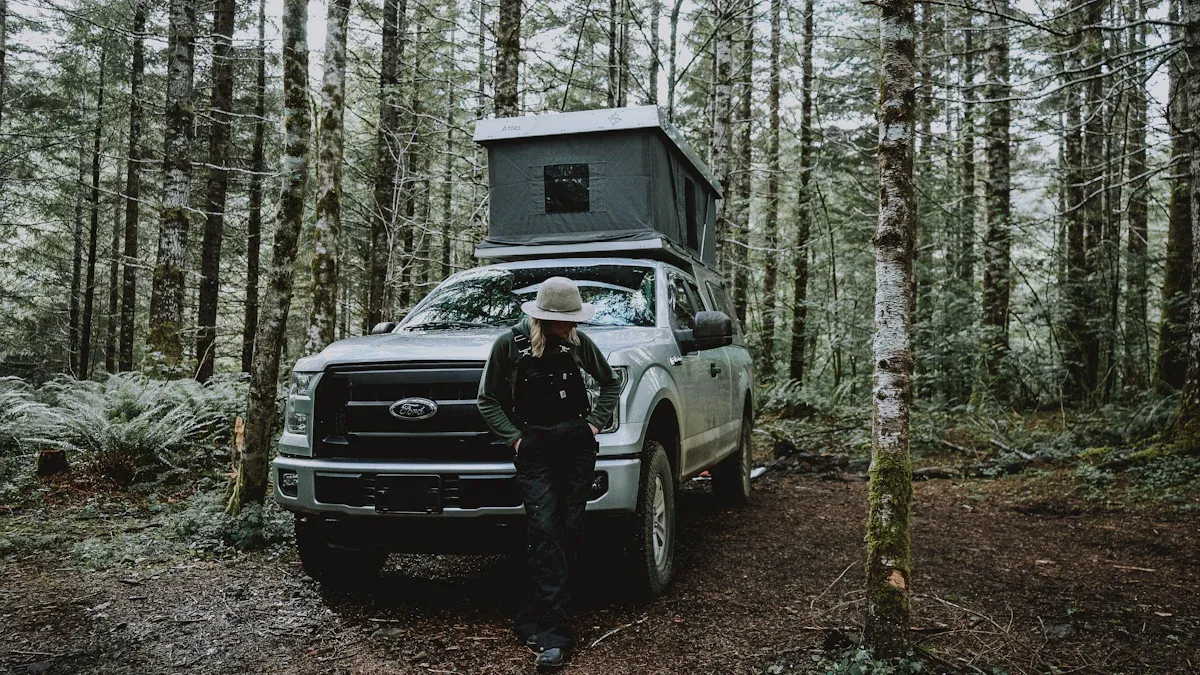
One of the biggest advantages of a truck tent is the elevated sleeping experience it offers. By setting up in the truck bed, campers can avoid the discomfort of sleeping on uneven or rocky ground. This elevation also keeps them away from damp soil, ensuring a dry and cozy night’s rest. Truck tents utilize the often-overlooked space in a pickup bed, transforming it into a practical and comfortable sleeping area.
Although specific studies on truck tents are limited, the popularity of rooftop tents highlights the benefits of sleeping off the ground. Rooftop tents, which share a similar elevated design, are praised for their comfort and protection. Campers using these setups report better sleep quality, especially in rugged terrains. Truck tents provide a comparable experience, making them a favorite for those seeking a mix of adventure and comfort.
Tip: To maximize comfort, consider adding a memory foam mattress or sleeping pad to your truck tent setup.
Convenience and Fast Setup
Truck tents are designed with convenience in mind. Unlike traditional ground tents, they eliminate the need to clear debris or search for a flat spot. Many models, like the Rightline Gear Truck Tent, can be set up directly in the truck bed, saving time and effort. Features such as color-coded poles and simplified designs make the process even easier. For instance, the Rightline Gear tent uses only three poles, reducing setup time significantly.
Some truck tents, like the RealTruck GoTent, take convenience to the next level with their accordion-style pop-up design. This innovative feature allows campers to set up or pack away the tent in under a minute. The Fofana Truck Tent is another standout option, known for its quick deployment. These time-saving designs make truck tents an excellent choice for campers who value efficiency.
Did you know? The RealTruck GoTent’s bungee cables make stowing the tent just as quick and easy as setting it up.
Safety from Wildlife and Weather
Camping in a truck tent provides an added layer of safety compared to ground tents. The elevated position keeps campers out of reach of small animals and insects, reducing the likelihood of unwanted encounters. This is especially beneficial in areas with active wildlife. The sturdy materials used in truck tents, such as ripstop nylon and waterproof fabrics, offer reliable protection against harsh weather conditions.
Truck tents also shield campers from sudden rain or muddy terrain. Their design ensures that water doesn’t seep into the sleeping area, keeping everything dry and comfortable. For those venturing into backcountry or off-road locations, this added security can make a significant difference. With a truck tent, campers can enjoy the outdoors without constantly worrying about their safety or the weather.
Cost-Effectiveness Compared to Other Options
Many campers want to know if a truck tent saves money compared to other ways to camp. The answer often depends on what someone needs and how often they camp. Truck tents usually cost less than rooftop tents or RVs. They also offer more comfort than a basic ground tent.
Let’s look at some common camping options and their average prices in 2025:
| Camping Option | Average Price (USD) | Extra Gear Needed? | Typical Lifespan |
|---|---|---|---|
| Ground Tent | $80 – $300 | Sleeping pad, tarp | 3-5 years |
| Truck Tent | $200 – $600 | Mattress, liner | 4-7 years |
| Rooftop Tent | $1,000 – $3,000 | Ladder, rack | 5-10 years |
| Small RV/Trailer | $10,000+ | Maintenance, fuel | 10+ years |
A truck tent sits in the middle. It costs more than a ground tent but much less than a rooftop tent or RV. Many people like that they can use their own pickup truck and do not need to buy a new vehicle or expensive gear.
Tip: Truck tents do not need special racks or tools. Most people can set them up with what they already have.
Here are some reasons why many campers see truck tents as a smart buy:
- They use the space in a pickup truck, so there is no need to pay for a campsite with hookups.
- They last for several years with good care.
- They do not need much extra gear, which saves money over time.
- They work well for both short trips and longer adventures.
Some campers want to know about hidden costs. Truck tents may need a mattress or liner for extra comfort. These items do not cost much compared to the price of a rooftop tent or RV. Most people find that the total cost stays low.
Note: If someone already owns a pickup, a truck tent can turn it into a camper for a fraction of the price of other options.
In 2025, many families and solo travelers choose truck tents because they offer a good balance between price and comfort. They help people enjoy the outdoors without spending too much.
Cons of a Truck Tent
Setup Limitations and Compatibility Issues
Setting up a truck tent sounds easy, but it can bring some headaches. Many campers find that they need to take down the tent every day if they want to drive somewhere. This means extra work, especially on longer trips. Some people say rolling up the tent and packing it away gets old fast.
Not every tent fits every truck. Campers must check the size of their truck bed before buying. Some tents only work with certain models or bed lengths. For example, a tent made for a 6-foot bed will not fit a 5-foot bed. Rain flys can also be tricky. They help with privacy and weather, but they add more steps to the setup.
Tip: Always measure your truck bed and read the tent’s instructions before your trip.
Some users compare truck tents to rooftop tents. They notice that truck tents take less time to set up, but they do not offer the same insulation or weather protection. Air mattresses with low R-values can feel cold at night. Most of these problems come from real campers sharing their stories online.
Space and Storage Constraints
Space inside a truck tent feels tight, especially in smaller trucks. Two people in a 5-foot bed will have little room to stretch out. Taller campers may need to sleep at an angle or curl up. There is not much space for gear, bags, or even shoes.
Here are some common space issues campers face:
- Sleeping area feels cramped for more than one person.
- Limited headroom makes it hard to sit up or change clothes.
- Storage for backpacks and gear is often outside the tent or squeezed into corners.
A truck tent uses the truck bed, so campers lose that space for hauling other items. If someone brings bikes, coolers, or extra gear, they need to find another spot for them. Some campers use the cab of the truck for storage, but this means moving things back and forth.
Mobility and Accessibility Drawbacks
A truck tent can limit how much campers move around. Once the tent is set up, the truck cannot go anywhere without taking the tent down. This makes quick trips to town or trailheads harder. Campers who like to explore during the day may find this frustrating.
Getting in and out of the tent can also be a challenge. Some tents require climbing into the truck bed, which is not easy for everyone. Rain or mud can make the steps slippery. People with limited mobility may struggle with this setup.
Note: If someone needs to leave quickly because of weather or an emergency, packing up the tent takes time.
A truck tent works best for campers who plan to stay in one spot for a while. People who want to move often or need fast access to their truck may want to look at other options.
Weather and Durability Concerns
Weather can change fast when camping. Rain, wind, and sun all test a tent’s strength. Many campers worry about how well their tent will hold up. Some truck tents use strong materials like ripstop nylon or canvas. These fabrics help block rain and wind. Others use cheaper materials that may not last as long.
Heavy rain can cause leaks. Some tents have seams that let water in. Campers often use seam sealers or tarps for extra protection. Wind is another problem. Strong gusts can bend poles or tear fabric. Some tents come with extra tie-downs or stronger frames. These features help the tent stay in place during storms.
Sun can also damage a tent. UV rays break down fabric over time. Faded colors and weak spots may appear after many trips. Some tents have UV-resistant coatings. These coatings help the tent last longer.
Here are some common weather and durability concerns:
- Rain: Leaky seams, water pooling, and wet gear.
- Wind: Broken poles, ripped fabric, and tents blowing away.
- Sun: Fading, weak spots, and brittle material.
- Cold: Thin walls that do not keep heat in.
Tip: Always check the weather forecast before your trip. Bring extra tarps or covers for added protection.
Campers also worry about how long their tent will last. Some tents last for years with good care. Others wear out after just a few trips. The table below shows what affects a tent’s lifespan:
| Factor | Impact on Durability |
|---|---|
| Material Quality | Stronger fabrics last longer |
| Stitching and Seams | Well-sealed seams prevent leaks |
| Frame Strength | Metal frames resist wind better |
| UV Protection | Coatings slow sun damage |
| Care and Storage | Clean, dry storage extends life |
Some campers share stories about tents that survived big storms. Others talk about tents that broke after one season. Taking care of the tent makes a big difference. Dry the tent before packing it away. Store it in a cool, dry place. Check for damage after each trip.
Weather and durability matter a lot when choosing a tent. A strong tent keeps campers safe and dry. It also saves money in the long run.
Truck Tent vs. Ground Tent vs. Rooftop Tent
Comfort and Setup Differences
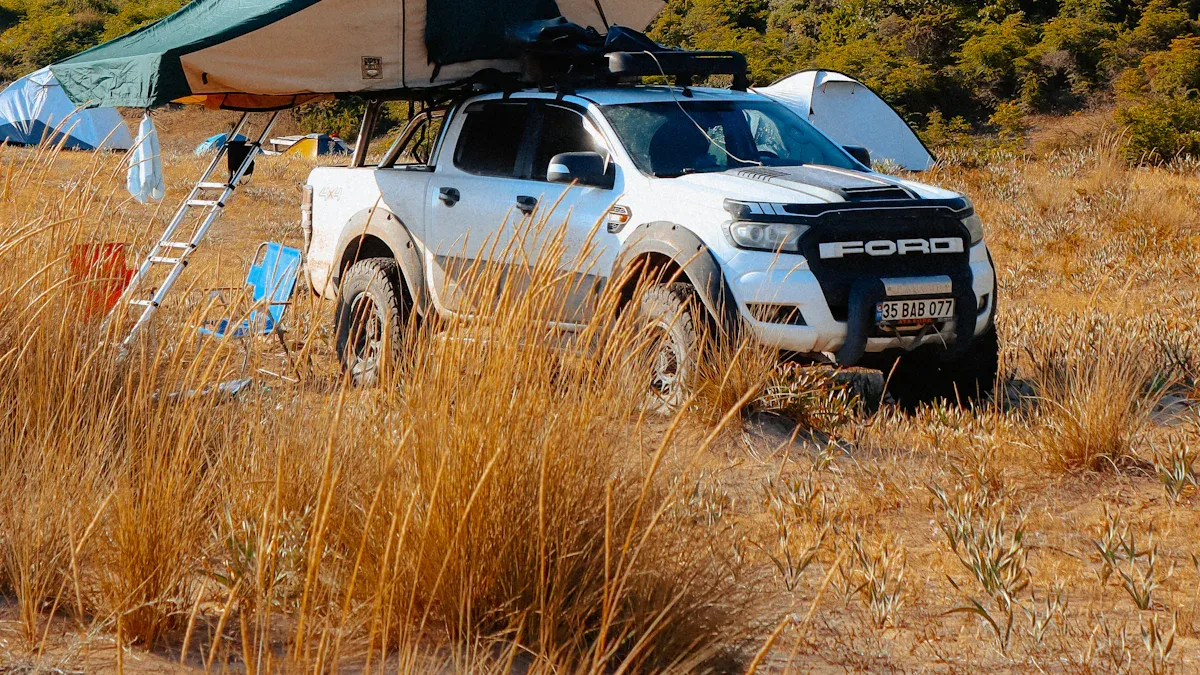
Comfort can make or break a camping trip. Many campers notice that rooftop tents feel the most like a real bed. These tents often come with thick mattress pads and sit high above the ground, offering great views and a sense of safety. Truck tents also keep campers off the ground, which means fewer worries about mud, rocks, or bugs. The truck bed gives a flat surface, so sleeping feels more stable than in a ground tent. Ground tents, on the other hand, usually have more space but can feel less comfortable. Sleeping on uneven ground or dealing with dirt inside the tent is common.
Setup time matters, too. Ground tents are quick to pitch and easy to move. Rooftop tents can pop up in about a minute once mounted, but getting them on the car takes effort. Truck tents need an empty truck bed and take a bit longer to set up than ground tents. Campers must pack up both rooftop and truck tents before driving away.
Cost and Value Comparison
Price is a big factor for many families. Ground tents are the most affordable choice. They come in many sizes and styles, making them easy to find and replace. Truck tents cost more than ground tents but less than rooftop tents or camper shells. Rooftop tents sit at the top of the price range. They need a roof rack and can cost thousands of dollars.
Here’s a quick look at the value each tent offers:
| Tent Type | Comfort Level | Average Price (USD) | Durability |
|---|---|---|---|
| Ground Tent | Basic | $80 – $300 | Moderate |
| Truck Tent | Good | $200 – $600 | Good |
| Rooftop Tent | Excellent | $1,000 – $5,000+ | Excellent |
Note: Rooftop tents last longer and feel more like home, but the price can be a dealbreaker.
Versatility and Use Cases
Each tent type fits different camping styles. Ground tents work best for groups or families who want space and flexibility. Campers can leave them set up and use the car during the day. Rooftop tents suit those who want comfort, quick setup, and safety from wildlife. They work well for overlanding or road trips where campers stay in one spot each night. Truck tents appeal to people who already own a pickup and want a cleaner, elevated sleeping area. They offer a good mix of comfort and value but limit mobility since the tent must come down before driving.
Tip: Think about your camping plans and how often you need to move your vehicle. The right tent depends on your needs and style.
Who Should Choose a Truck Tent?
Best Scenarios for Truck Tents
Some campers find that a truck tent fits their style perfectly. People who own a pickup truck and want to camp in comfort often choose this setup. Many younger campers, like millennials and Gen Z, enjoy the adventure and ease of use. They like to try new things and want gear that matches their active lifestyle. Families who want a quick weekend getaway also benefit. A truck tent works well for those who want to avoid sleeping on the ground or dealing with mud and bugs.
Camping has become more popular across the United States. About 78 million households reported camping activity in recent years. This growth includes people from many backgrounds and age groups. Outdoor lovers who enjoy activities like hunting, fishing, or overlanding often pick a truck tent for its convenience. People with busy lives appreciate how fast they can set up camp and start relaxing.
Key reasons to choose a truck tent:
- Pickup truck owners who want to use their vehicle for camping.
- Campers who value comfort and quick setup.
- Outdoor fans who like to explore new places but want a safe, dry place to sleep.
- Those who camp in areas with lots of bugs or wet ground.
Tip: People living in regions with high pickup truck ownership, like North America, find truck tents especially useful.
When to Consider Other Camping Options
Not every camper will find a truck tent the best fit. Some people need more space for gear or want to camp with a large group. Ground tents offer more room and flexibility. Campers who plan to move their vehicle often during a trip may get frustrated with the need to pack up the tent each time.
Other options work better for those without a pickup truck. Rooftop tents or traditional ground tents suit people who drive cars or SUVs. Campers with limited mobility might find it hard to climb into a truck bed. People who camp in extreme weather may want a more durable or insulated shelter.
A quick checklist for when to look at other options:
- No pickup truck available.
- Need to move the vehicle often.
- Camping with a big group or lots of gear.
- Want extra headroom or standing space.
- Expecting harsh weather or long trips.
Note: Choosing the right tent depends on your camping style, group size, and travel plans.
Truck Tent Decision Guide
Checklist for Choosing a Truck Tent
Choosing the right tent for a pickup can feel tricky. Many campers want something that lasts, keeps them dry, and feels easy to use. Others care most about comfort and space. A good checklist helps everyone find the best fit for their adventures.
Automoblog’s review team created a simple way to compare tents. They use four main criteria: Durability, Weatherproofing, Ease of Use, and Comfort. Each tent gets a score from 1 to 5 stars in each area. This makes it easy to see which tents stand out.
Here’s a handy table to help with the decision:
| Criteria | What to Look For | 1 Star | 3 Stars | 5 Stars |
|---|---|---|---|---|
| Durability | Strong poles, tough fabric, solid stitching | Flimsy | Decent build | Heavy-duty |
| Weatherproofing | Waterproof fabric, sealed seams, rainfly | Leaks | Some protection | Stays dry |
| Ease of Use | Quick setup, clear instructions, easy storage | Confusing | Average effort | Super simple |
| Comfort | Good airflow, roomy inside, insulation | Cramped | Okay space | Feels spacious |
Tip: Campers should check each tent’s ratings before buying. A tent with high marks in all four areas will likely last longer and keep campers happier.
Campers can also ask themselves these questions:
- How often will they use the tent?
- Will they camp in rain, wind, or cold?
- Do they need space for more than one person?
- Is fast setup important for their trips?
A checklist like this saves time and money. It helps campers avoid tents that break or leak. It also points them toward tents that make camping fun and stress-free.
Choosing the right camping shelter depends on what someone values most. Some campers want easy setup and a dry place to sleep. Others need more space or the freedom to move their vehicle. The table below shows the main pros and cons:
| Pros | Cons |
|---|---|
| Easy to pitch on any surface | Must unload gear from truck bed before setup |
| Uses truck bed space well | Cannot drive away with tent set up |
| Lightweight and compact | Only works with pickup trucks |
| Elevated sleeping keeps you dry | |
| Good protection from wildlife and wind | |
| Great for hunting and fishing trips |
Every camper has different needs. Matching the tent to the camping style makes trips more fun and less stressful. The decision guide above helps campers pick the best fit for their next adventure.
FAQ
How long does it take to set up a truck tent?
Most truck tents take 10 to 20 minutes to set up. Some pop-up models go up even faster. Practice at home helps campers get quicker. Reading the instructions before the first trip saves time.
Can a truck tent fit any pickup truck?
Not every truck tent fits every truck. Campers need to check the bed size and shape. Most brands list which trucks work best. Always measure the truck bed before buying.
Are truck tents safe in bad weather?
Truck tents handle light rain and wind well. Strong storms or heavy snow can cause problems. Using a rainfly and staking down the tent helps. Campers should check the weather before heading out.
Is it comfortable to sleep in a truck tent?
Sleeping in a truck tent feels more comfortable than sleeping on the ground. The truck bed gives a flat surface. Adding a mattress or sleeping pad makes it even better. Some campers bring pillows and blankets for extra comfort.
Can you leave gear in the truck bed with the tent set up?
Space inside a truck tent is limited. Small bags or shoes fit, but big gear may not. Many campers store extra items in the cab or under the truck. Keeping things organized helps everyone sleep better.
Post time: Jun-12-2025