




TL;DR — How CBNB’s 4-Layer System Works:
- Layer 1 (Factory Screening): Multi-step vetting including D&B credit checks, ISO 9001 verification, and on-site audits before any MOQ is accepted — eliminating high-risk suppliers before they touch your order.
- Layer 2 (Quality Control): AQL 2.5 inspection standard with pre-production, during-production, and pre-shipment phases — three checkpoints, not one — so defects are caught before they reach your warehouse.
- Layer 3 (Logistics & Warehousing): Centralized consolidation in Ningbo, bonded warehouse options for EU and US market goods, and 18–25 day sea freight from CN to major destination ports with real-time tracking.
- Layer 4 (Trade Finance & Risk Management): Letter of Credit (LC) and Trade Assurance instruments for first-order risk mitigation, plus a dedicated compliance team that handles customs documentation, HS code classification, and regulatory documentation for 40+ destination markets.
- The result: You source from 36,000 factories but deal with one logistics partner, one QC protocol, one documentation package, and one payment structure.
CBNB Supplier’s supply chain is not a marketplace — it’s a managed system. That distinction matters more than most buyers realize when they’re evaluating Chinese sourcing partners. A marketplace lists factories and lets buyers negotiate directly; CBNB pre-qualifies every factory, runs every component through standardized QC checkpoints, and manages the documentation, logistics, and payment risk from PO to delivery. Because we operate this way, we absorb the coordination overhead that typically makes multi-factory sourcing prohibitively complex for mid-market buyers. Therefore, whether you’re sourcing 200 units of a single SKU or building a 40-SKU catalog across four product categories, you interact with one supply chain system — not 40 different factory contacts.
This article explains exactly how CBNB’s four-layer system works, what it means for your sourcing operation, and why the managed approach catches problems before they become expensive. If you’ve ever received a shipment that didn’t match your sample, waited 6 weeks for a factory to correct a quality issue, or paid landing fees that weren’t in your original cost model — this is the infrastructure that should have protected you.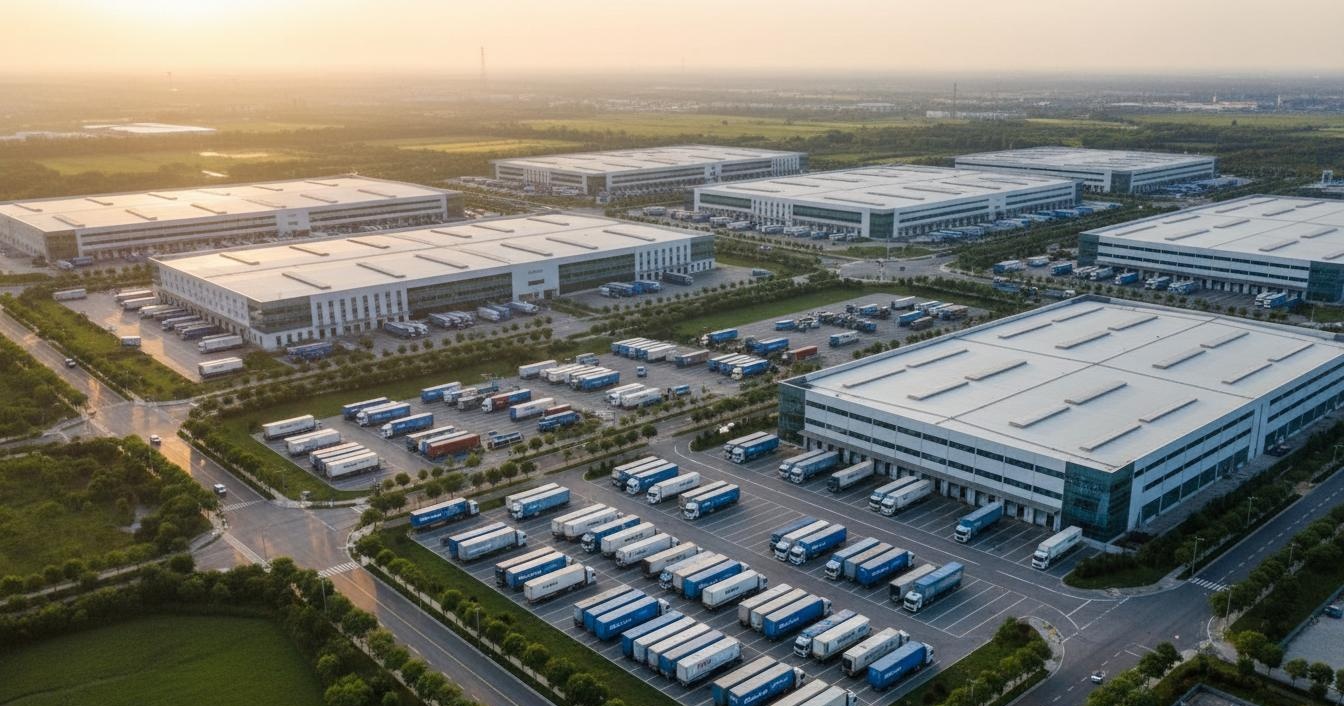
Layer 1: Factory Screening and Vetting
How We Select Factories Before You Ever Place an Order
Every factory in CBNB’s partner network passes through a multi-stage vetting process that takes an average of 6–8 weeks to complete. We don’t accept factories based on self-reported capabilities — we verify them through independent channels.
Stage 1 — Business Registration Verification: We cross-reference each factory’s business license against China’s State Administration for Industry and Commerce (SAIC) database, verifying legal entity status, registered capital, and operational scope. This eliminates shell companies and shell trading companies that resell goods from unverified sub-suppliers.
Stage 2 — Financial Credit Assessment: We run Dun & Bradstreet (D&B) credit reports on all partner factories, reviewing payment history, credit utilization, and legal proceedings. Factories with outstanding judgments, significant debt ratios, or payment defaults in the past 36 months are rejected from the network — regardless of price competitiveness. A factory that offers 15% lower pricing but carries payment risk isn’t a savings; it’s a liability that lands in your order queue.
Stage 3 — Production Capability Audit: Our on-site procurement team in Ningbo conducts a 2–3 day production capability audit covering: machine park (type, age, maintenance condition), worker-to-machine ratios, production line speed and yield rates, and floor space utilization. For specialized processes — injection molding above 800 tons clamping force, silicone molding, CNC machining — we verify that the factory owns or has exclusive access to the required equipment, not that they subcontract those operations undisclosed.
Stage 4 — Certification Verification: Any quality or safety certification claimed by a factory (ISO 9001, ISO 9001:2015, CE, UL, CB) is verified through the issuing certification body’s public registry or by requesting the original test report and checking the report number against the issuing laboratory’s database. For sampling inspection standards, we reference ISO 2859-1 (AQL sampling procedures) as the baseline inspection standard across our network.
Stage 5 — Social Compliance Screening: For buyers with corporate social responsibility (CSR) requirements — particularly brands in the EU, UK, and Australia — we conduct a basic CSR audit covering working hours, minimum wage compliance, and child labor prevention. This is not a full SA8000 audit (that is available as a paid add-on service), but it establishes the factory’s baseline willingness to comply with international labor standards.
Factories that pass all five stages enter CBNB’s Active Partner Network. Factories that fail any stage receive a formal rejection notice with the specific reason. Approximately 22% of factories that apply to join our network are rejected at the vetting stage — primarily for certification falsification (claiming ISO 9001 without verifiable evidence), financial instability, or production capacity misrepresentation.
Layer 2: Quality Control — Three-Phase Inspection Protocol
Pre-Production, During Production, and Pre-Shipment — Not Just One Final Check
Most sourcing failures happen because QC is treated as a final inspection — a check at the end of production that either passes or fails the finished goods. CBNB operates a three-phase inspection protocol that catches deviations at the stage where they’re cheapest to correct.
Phase 1 — Pre-Production Inspection (PPI): Before tooling is committed for production runs over 2,000 units, our on-site QC team inspects incoming raw materials and components against the approved sample. For injection-molded parts, this means checking the first-shot samples from new tooling cavities against dimensional drawings. For textile products, this means verifying dye lot consistency against the approved color standard (Pantone or RAL reference). For mechanical assemblies (like recovery gear kits), this means confirming that each sub-component — shackles, straps, rings — matches the specification sheet before assembly begins. A PPI failure at this stage means tooling adjustments before mass production starts — a 3–5 day delay. A final inspection failure means the goods are already packed and containerized — a $3,000–$8,000 rework cost plus delayed shipment.
Phase 2 — During Production Inspection (DPI): For orders over 5,000 units per SKU, our QC team visits the factory at the 30% and 70% completion stages of production. At 30%, we verify that the production process is tracking to the approved specification — not deviating in materials or assembly method. At 70%, we check a statistical sample of completed units against the full QC checklist (dimensions, function, cosmetics, packaging). If the DPI at 70% identifies a defect rate above AQL 2.5, we issue a Corrective Action Request (CAR) to the factory and halt production until the root cause is addressed. This sounds disruptive — and it is — but it’s far less expensive than a container of non-conforming goods arriving at your destination port.
Phase 3 — Pre-Shipment Inspection (PSI): The final gate before goods are released to the logistics provider. Our QC inspector visits the warehouse or factory, pulls a sample per ISO 2859-1 single-sampling plans (normal inspection, Level II), and conducts the full inspection checklist. The PSI report is the document that authorizes release of the goods — without a passing PSI, no goods leave the factory. For buyers with specific market compliance requirements (CE marking, FDA food contact, EPA regulations for chemical products), our PSI checklist is customized to the destination market’s regulatory requirements and includes documentation verification against the required standards.
CBNB’s QC team conducts approximately 12,000 inspections annually across our partner factory network, with an average first-pass yield of 94.3% — meaning the vast majority of orders ship without incident. The 5.7% that require corrective action are handled through our factory escalation protocol, which includes mandatory root cause analysis reports and 30-day follow-up inspections on all CARs issued.
Layer 3: Logistics and Warehousing
Ningbo as the Central Hub — Then the World
All CBNB partner factories ship through our consolidation hub in Ningbo, Zhejiang Province — China’s largest port by cargo tonnage and the gateway for the Yangtze River Delta manufacturing cluster. The Ningbo hub serves three functions: (1) physical consolidation of multi-factory orders into single shipments; (2) bonded warehousing for goods that require duty deferral or EU/UK market compliance staging; and (3) re-packaging and labeling services for market-specific retail requirements.
Consolidated FCL and LCL Shipping: When you source across multiple product categories — say a vehicle recovery kit, a pet travel bowl, and a hiking accessory — each factory produces and ships to the Ningbo consolidation hub independently. We then combine these into a single FCL (Full Container Load) or LCL (Less than Container Load) shipment, which means you pay one ocean freight cost instead of three. For buyers who need mixed-product FCLs but lack the volume for a full container per category, the consolidation model typically reduces ocean freight costs by 40–65% versus factory-direct shipping arrangements.
Bonded Warehousing: For EU-bound goods, we operate a bonded warehouse in the Ningbo free-trade zone where goods can be held without duty payment until the customs entry is formalized. This is particularly valuable for buyers operating under customs duty deferment schemes — duties are paid at the point of final release, not at the point of export from China. For UK-bound goods post-Brexit, our customs team handles the UKCA marking requirements and ensures that all documentation is aligned with the UK’s product safety regulations before the goods enter the country.
Real-Time Shipment Tracking: Every CBNB shipment is tracked through a GPS-enabled container management system that provides milestone updates at: factory pickup, hub arrival, customs clearance (origin), vessel departure, vessel arrival, customs clearance (destination), and last-mile delivery. You receive a tracking link at order confirmation that updates every 24 hours with current vessel position and estimated arrival at the destination port. For buyers managing retail inventory timelines, this eliminates the uncertainty that typically comes with transacting with multiple factories — you know where your goods are at all times.
Sea Freight Benchmarks: From Ningbo to major destination ports — Los Angeles/Long Beach (West Coast US): 18–22 days; Felixstowe/Southampton (UK): 28–35 days; Rotterdam/Antwerp (EU): 30–38 days; Sydney/Melbourne (Australia): 25–30 days. Air freight is available for urgent shipments — 3–5 days to major destinations — at approximately 3× the cost of sea freight. We present both options at the point of quotation so you can make the cost-versus-speed trade-off based on your inventory position.
Layer 4: Trade Finance and Risk Management
Protecting Your Payment and Ensuring Market Compliance
The two largest sources of friction in China sourcing are payment risk and regulatory compliance. CBNB’s Layer 4 addresses both — not by insuring against every risk, but by structuring the transaction in a way that aligns incentives and distributes risk appropriately between buyer and supplier.
Payment Instruments for First Orders: For buyers placing their first order with a new factory, we recommend Letter of Credit (LC) payment terms. An LC issued through your bank guarantees payment to the factory upon presentation of compliant shipping documents — which means the factory is motivated to produce conforming goods because they need those documents to receive payment. For repeat orders with factories that have passed our QC protocol without CARs, we shift buyers to Telegraphic Transfer (TT) 30% deposit / 70% balance terms, which reduces banking fees while maintaining a reasonable risk position for both parties. We do not recommend Cash in Advance (CIA) terms for orders over $10,000 — CIA provides zero leverage if the factory fails to deliver conforming goods.
Trade Assurance for Eligible Buyers: CBNB’s Trade Assurance program allows qualified buyers to place orders with payment covered up to 120% of the order value in the event of factory non-delivery or quality failure. Eligibility is based on buyer transaction history with CBNB and order size. The program is designed to give first-time buyers the confidence to place orders with factories they haven’t previously worked with directly — because the financial risk is underwritten by CBNB rather than absorbed entirely by the buyer.
Customs and Regulatory Compliance: Every shipment CBNB handles includes a full documentation package prepared by our in-house customs team: commercial invoice, packing list, Bill of Lading (B/L), certificate of origin (Form E for China-ASEAN FTA, EUR.1 for China-EU GSP where applicable), and any required product-specific certifications (CE declaration, FDA facility registration, etc.). For buyers importing into the US, our customs team is familiar with CBP import requirements including the食品安全现代化法案 (FSMA) for food-contact products and the消费者产品安全改进法案 (CPSIA) for general merchandise. For EU-bound goods, we handle REACH compliance documentation and ensure that all chemical substances in the product are registered under the EU chemicals regulation.
HS Code Classification and Duty Optimization: Incorrect HS code classification is one of the most expensive mistakes in international trade — misclassified goods face penalty fees, customs delays, and potential seizure. CBNB’s trade compliance team maintains a proprietary HS code database covering 4,200+ product SKUs across our four core categories (hiking, pet, garden, vehicle). For new products not yet in our database, we engage third-party customs brokers in the destination market to confirm classification before the order is placed — so you’re not hit with unexpected duty rate changes mid-shipping.
For a detailed overview of how CBNB operates as an organization — including our history, export volumes, and position in the China foreign trade landscape — visit About CBNB — Top 500 China Foreign Trade Enterprise, $2B+ Annual Export. Our full product range across all four categories is available at View Full Product Catalog — Hiking, Pet, Garden, Home & Vehicle.
Frequently Asked Questions
1. How does CBNB charge for its supply chain management services?
CBNB operates on a margin model — our service fee is built into the product pricing, not charged as a separate line item. You pay the EXW or FOB Ningbo price, and that price reflects our procurement, QC, and documentation services. There are no setup fees, no annual membership fees, and no per-inspection charges for standard AQL inspections (included in the per-unit cost). For buyers requiring additional services — expedited inspection, factory audits for CSR compliance, air freight coordination — these are quoted as separate line items. The result is a transparent, predictable cost structure where the only variables are unit price, tooling (for custom products), and logistics.
2. What happens when a factory in CBNB’s network fails a QC inspection?
When a factory fails a pre-shipment inspection, we issue a Corrective Action Request (CAR) with a mandatory root cause analysis report within 10 business days. Production is halted until the CAR is resolved. In practice, the most common resolution paths are: (1) the factory re-manufactures the non-conforming goods at their cost and re-submits for inspection; (2) CBNB arranges for a second factory in our network to produce the defective component as a substitute, with the original factory absorbing the cost differential; or (3) for systemic quality failures, the factory is suspended from our active network pending a full re-audit. We have permanently removed 47 factories from our network in the past 5 years for repeated quality failures — that number sounds high until you consider that we work with 36,000 factories and process 120,000+ orders per year. The removal rate is 0.13% — a small percentage, but we treat it as a floor, not a benchmark.
3. Can I visit a factory before placing an order?
Yes — and we actively encourage it for buyers placing orders above $100,000 per SKU. CBNB’s Ningbo procurement team can arrange factory visits with 7 days’ notice, including translator services, on-site inspection support, and a written visit report summarizing production capability, current order book, and worker conditions. For buyers who cannot travel, we offer a live video inspection option where our QC team conducts a virtual walkthrough of the factory floor and answers your questions in real time. The video inspection is available at no additional cost for orders above $50,000; a $200 fee applies for orders below that threshold (refundable against your first order).
4. How does CBNB handle product recalls or compliance issues after goods have been delivered?
Product recall support is a separate service agreement that we offer to buyers importing into regulated markets (US, EU, UK, Australia). The agreement includes: a traceability protocol that maintains batch-level production records for 3 years post-delivery; a 48-hour response window for any compliance issue raised by the destination market authority; and coordination with the factory for root cause analysis and corrective action documentation. Recall support agreements are priced at 0.3% of the order value per year, renewable. For most consumer goods categories, this is a marginal cost that provides significant protection against the reputational and financial damage of an untracked recall.
5. What incoterms does CBNB support for international shipments?
We support all major Incoterms® 2020 arrangements: EXW (Ex Works), FOB (Free on Board), CIF (Cost, Insurance and Freight), DDP (Delivered Duty Paid), and DAP (Delivered at Place). The majority of our buyers work on FOB Ningbo terms — meaning the buyer’s responsibility begins when the goods are loaded onto the vessel at Ningbo port. This gives the buyer maximum flexibility to use their own freight forwarder for the ocean leg while CBNB manages the inland logistics to the port. For buyers who prefer a single point of responsibility, DDP terms are available with CBNB managing the full chain from factory to destination warehouse.
6. How does CBNB protect buyer data and prevent factories from selling directly to my customers?
We include a Non-Circumvention Clause in every factory partnership agreement, legally prohibiting factories from contacting CBNB buyers’ end customers, distributors, or retail partners directly for a period of 5 years post-relationship. Violation triggers liquidated damages of 3× the annual order value with the offending factory, plus immediate suspension from our network. This is backed by our standard Terms of Trade, which every buyer accepts at the point of first order. For buyers with heightened IP protection requirements — particularly for patented or design-registered products — we can arrange factory-level NDAs with jurisdiction-specific enforcement clauses.
Start Your Sourcing Project
Ready to work with a managed supply chain partner instead of a marketplace? Tell us what you’re sourcing — we’ll match you with pre-vetted factories and run every order through our 4-layer QC system.
Post time: May-19-2026